Tuesday, September 28, 2010

Through Corridors of Continents: Bosphorous in Istanbul

How much person can love another person? This question may blossom into colorful responses from majority of people as they live the quest of this question every day. But how much a person can love a town or city in which he/she lived, lives and will continue to live on.
This love is not out of obsession, dependence, unavoidable affiliation or uncompromising cultural bondage. This love must be generated from the deepest corners of our affection towards what that town really stands for.
Orhan Pamuk in his ‘Istanbul: Memoirs and The City’ articulates and has narrated this personal touch in a seemingly universal way which can be felt about every historic city unless and until we really try to appreciate the idea that we can love a town, beyond the pleasure and melancholy of relations.


Pamuk says, “If the city speaks of defeat, destruction, deprivation, melancholy and poverty, the Bosphorous sings of life, pleasure and happiness. Istanbul draws its strength from Bosphorous.”
When we tolerate the immense torrent of warm sprinkles of sea and cold breeze coming from across the old and new cross-sections of Istanbul it is impossible to conceal what Orhan further says about the crucial place of a city in his life, true about everybody else`s personal life.
He says, “Whenever I find myself talking of the beauty and the poetry of the Bosphorous and Istanbul`s dark streets, a voice inside me warns against exaggeration, a tendency perhaps motivated by a wish not to acknowledge the lack of beauty in my own life. If I see my city as beautiful and bewitching, then my life must be so too.”
The eternal hope embedded in Orhan`s words eventually sum up: “Life can`t be all that bad, I`d think from time to time, whatever happens, I can always take a walk along the Bosphorous.”
---------------------------------------------------------------------------------------------

Monday, June 21, 2010

Theory, Philosophy and Justice: The Bygone Words for Executive ?


                  पंछी नदियाँ पवन के झोंके 
                   कोई सरहद ना इन्हें रोकें 
                   सरहद इंसानों के लिए हैं 
                   सोचो तुम और मैंने क्या पाया 
                   इंसान होके !
If someone says that world regime of human rights started with the 'Universal Declaration of Human Rights' in 1948, then ask him/her a question that if they know about Hannah Arendt. Born in 1906 and passed away in 1975, she was a German theorist of politics and philosopher of Jewish origin. She actually questioned the arrival of Universal Declaration emphasising that it is actually the nd of universal comprehensive possible framework to build for protection of human rights. As she pointed out and later vindicated by many, the coming into force of Universal Declaration actually gave the privileges of that charter only to the citizens of the nation states and not to the people suffering from the crisis happening across sovereign countries. 


This was the key issue when Upendra Bakshi, noted Professor of jurisprudence and humanitarian law was speaking on "The Future  of Human Rights in a Home Away from Home: Towards Rethinking the Right to Have Human Rights" at the public meeting organised to mark the World Refugee Day. Before going in the comical, ironical and subtle commentry Prof. Bakshi lead from the front about the possibilities of converging the Human Rights Law and Refugee Law. Let me share what Bakshi commented on the divergence and divorce between thinkers and actors on the ground when it comes to protection of the human rights.


He agreed to the assessment of one of the audiences about Professors being great reflectors on the interpretations of the law affecting the operations on the ground but not the true actors which are embedded in bureaucracy and civil service are actually making things happen. Prof. Bakshi had very insightful answer. He quoted Marx who said around 1850 that the "Suffering people should start thinking and thinking people do need to suffer!" This was on the lines of quotation which goes like this: "Act like a man of thought and think like a man of action !" He delicately exposed the great divide between two and how it is actually making a mockery of the people who deserve immediate attention, care and legal help; either they are refugees, people trapped in natural and man made crisis land locked away from opportunities of employment, education and livelihood.


In this context, it was worthwhile to reflect on the recently unfolded massive controversy about liability, responsibility and accountability in Bhopal Gas Tragedy. He lamented the role played by the civil service and bureaucracy in failing to deliver the compensation and justice to the aggrieved people. This had lead, according to him towards burecratisation of suffering. Is the executive lead by the civil service truly 'civil' and 'in service' of the people? Is the porous boundary between civil and evil which is actually provoking us to ask the question that to which people these executives are serving other than suffered? 


Two memorable TV shows braodcasted recently made a very strong point about introvert and extrovert character of our systems which we claim to have evolved during the brief stint of Indian democracy during last 60 years. One show hosted on NDTV 24/7 actually tarnished the work done by successive governments in the role they played to take an action against the culprits in the Bhopal gas tragedy. This show which invited many people from law, civil society, investigating agencies, political parties, media, diplomacy concluded in affirming that "As a system we have not learned to think. And even we learn something, are we applying that learning to solve the urgent issues of people related to development, health and environmental problems." Point made by Prof. Bakshi was beyond learning. Actually he was complaining about sycophancy of political class claiming themselves as learned who actually are never interested in learning or being in the phase of learning. In another show on IBN Live, Karan Thaper interrogated Minister Salman Khursheed about lack of credibility, integrity and authenticity in the outrageously vague commentary of the Congress spokespersons regarding the fallout of Bhopal Gas Tragedy trial court decision on seven June 2010. Mr. Thapar grilled Mr. Khursheed very wisely and ruthlessly to compel him to concede before him that in case if it is found that spokespersons are lying with their knowledge he will apologise for that.


This is actually perfect case when looked in the perspective of what Prof. Bakshi was trying to say. He said, "We need to move forward to go beyond the commentary to statesmanship and oratory of law and justice." If it is to be interpreted in my lay man`s words then we need to be careful about the platitudes of media, politicians and government about the rhetoric of black and white, right and wrong in the discourse about justice. Prof. Bakshi was pointing out towards necessity to have more attention towards questions of Theory, Philosophy and Justice when the gravity of human rights is to be considered. These are the times when there is great disregard and disrespect for the aspects of theory, philosophy of any thinking which finally shapes the solution through the means of law, policy and other instruments of states intervention in the society. As Prof. Bakshi put, if actually, if not ideally, good and rigorous theory is epitome of pragmatic actions we can/may usher in. 


So, going ahead with the discussion about the human rights of the refugee he said that in today`s world we must remember that everyone of us can be a refugee, exile in some form or other. It is not only about being in refuge condition during the voyage across the borders of state or nations. Everyone of us are subject to so much vulnerabilities that we need to understand the law and other discourses of human rights and refugees so as to help ourselves to be prepared for future. As Prof. Bakshi emphasised that refugees are not the problems of the past but the obligations of the future. We have to be prepared for these obligations of future especially out of top ten countries receiving maximum exodus of refugees, seven are developing countries. May be developing countries are  nurturing the culture of hospitality through which they can understand the problems of deprived, migrated and sufferings originating from different problems of identities. This is where developed countries and debate about immigration appears so loud and so much assertive as witnessed in recent UK Parliamentary elections and pervasive in the integration and regulation of European Union. 


Finally, very crucially Prof. Bakshi made very subtle but philosophically distinct definition of Responsibility, Accountability and Liability. He said, "Over the years Indian government and system has become more accountable in terms of new laws, procedures, conventions and acceding to the wish list of political correct principles of justice. But actually with the increase of measures and appearances in the court of law to perceive themselves as more accountable, state has become less responsible and less efficient in justice delivery mechanism. Secondly, when it is claimed that liability is defined in terms of law and other regulatory frameworks it does not mean that people who are accepting liability are actually responsible to the people whose grievances need to be addressed in a responsible manner. And thirdly the mention of word 'Responsibility'evokes a sense of linguistic whitewash. 'Responsibility'according to Derrida should express the sense in which we are Responsive with the Ability to address the problems before us. So the sensitivity which is inherent in our natural emotions is actually very much reflective when we are responsive to the events occurring around us. A sense of responsiveness actually gives the evidence of our priority framework in which we view the world around us which is appealing us to take a call to protect human rights being violated every other nook and corner. "


When disparities, discrimination and differences are getting unnoticed from system and state then the sufferings get institutionalised through bureaucracy. Even though India`s role in the humanitarian efforts has been lauded over the world, our own domestic track record deserves serious study for further because we are inheriting the ticking time bombs in terms of domestic displacements which are actually our own citizens being treated as foreigners. 


--------------------------------------------------------------------------------------------------------


Thursday, June 17, 2010

Whirlwind of Nuclear Debate


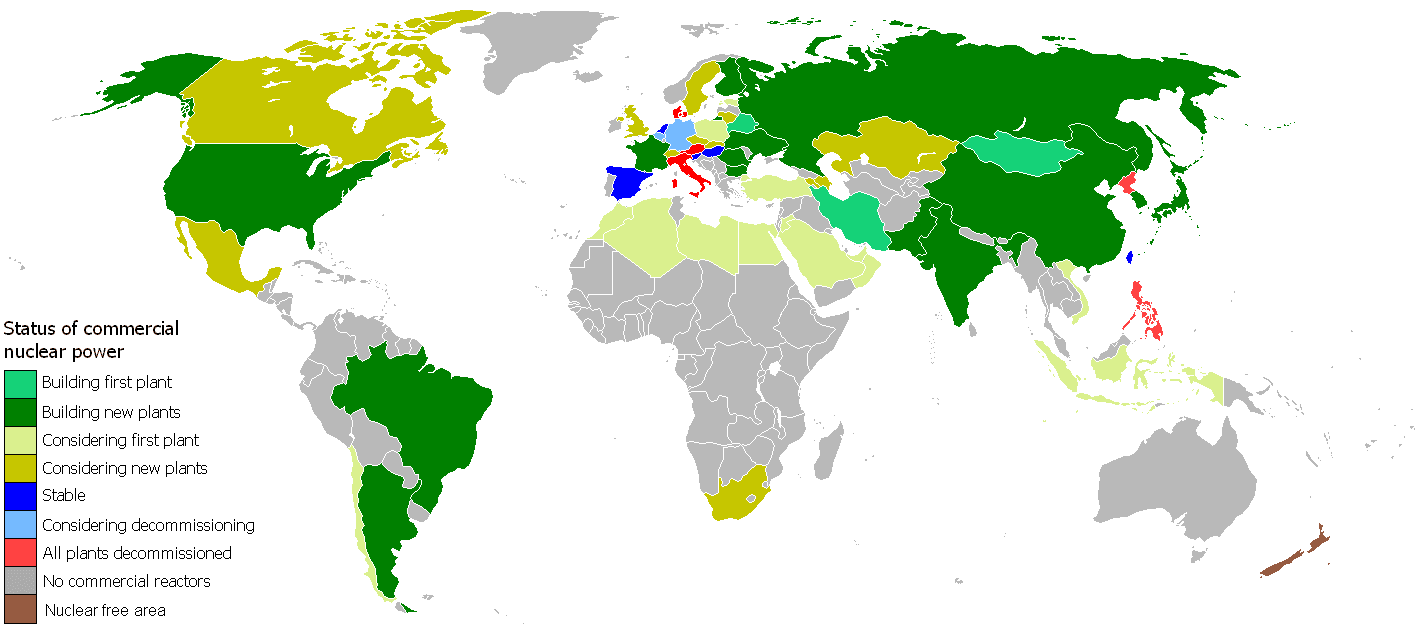
 The Civil Nuclear Energy Deal, The Non Proliferation Review Conferences, access to Uranium fuel from Nuclear Supplier Groups, heated debate about Nuclear Liability Bill in the context of Bhopal tragedy and aggressive protests against proposed Nuclear Energy Parks across the country have brought the diverse aspects of the nuclear issue weaved together in seamless web. The strategic angle is unavoidable whenever there is talk about civilian use, criteria of commercial viability and scaling up is inevitable whenever there is scholarly comment on executive responsibility towards development initiatives from the perspectives of Integrated Energy Policy of Planning Commission and dimensions of electoral politics are so crucial to ignore when there are larger questions about the implementation of these projects and its implications on sustainability of human lives.


Renewed interest in Nuclear
After end of the cold war, on one side where strategic thinkers are analysing the decreasing probability of nation states using nuclear weapons against each other, on the other side emerging opinion in think tanks across the world is converging around one common anticipation about terrorists, non-state actors, and sub-national forces acquiring small plutonium bombs to wreck havoc. The ongoing debate about nuclear disarmament through NPT Review Conferences revolves around these affirmations and fears. Compelled by calculations of energy use and geopolitics of fossil and renewable energy markets magnified by climate change debates, every sovereign country is trying to explore the nuclear option in the age of nuclear renaissance where some people are projecting it as a next green, perhaps most preferable green energy for long term solutions of mankind`s development priorities. Nearly 60 countries have approached International Atomic Energy Agency (IAEA) to seek permission to start nuclear energy development in their countries. Looking at the composition of those countries it is significant to note that many of those are outside the ‘umbrella’ provided by P-5 countries and nearly 25 of them are not self sufficient to start the nuclear energy program. (http://www.iaea.org/NewsCenter/News/2010/nuclnewcomers.html)


‘Enriched’ Proliferation Concerns
Even though there legitimate wishes of the countries to develop technologies for peaceful use of nuclear energy, ‘international community driven by NPT mandate’ fears it will lead to loosening of the grips of NPT regime. Because it will lead towards more sophisticated and clandestine parallel programmes which may lead towards development weapon grade Uranium, though quality of Uranium required for this purpose should be enriched upto the level of 85%. and more. This may inspire presently NPT member stated to opt out of the treaty. Especially example of North Korea is still fresh and very much alarming. So foresight experts are confirming the most probable ever increasing intensity of threat.  Thus, renewed efforts of ‘universalization of safeguards’ in the context of initiatives driven by IAEA supported by NPT establishment and Nuclear Energy Agency(OECD) increasingly being countered by the slogan ‘total nuclear disarmament’ especially by the countries like India who are often accused of double speak when there is question of commitment towards safeguards.


Negotiating NPT
Experts and strategic decision makers agree that accusation against India`s double speak was magnified when Indo-US Civil Nuclear Energy deal acknowledged the separation plan of strategic and civil nuclear energy plants. NPT`s consistent stress on Indian diplomacy to enter NPT as a nuclear non weapon state is actually negating the gains India has made over last few decades envisaged in the three stage nuclear power programme and commitment towards nuclear non-proliferation. DAE is firm on the belief that when negotiations about India-US Civil Nuclear Deal were in progress, there was no confusion in the minds of people representing India that this deal is going to give India status of Nuclear Weapons State. Going ahead they assert that “We maintain that when looked in the context of binary world in the eyes of NPT as NWS and NNWS, we are standing in between. We assert, we are not Non Nuclear Weapon State.” So, for India negating something is actually the effort to leverage gap between strategic asset of being NWS and liability of NNWS for greater future and to use that gap to create space for further strategic negotiations on the forum of NPT and other international forum. So, observers are not surprised on the failure of the NPT review conferences. They say, the success of non-proliferation initiatives largely depend upon the bilateral agreements like START and other negotiations outside the ambit of the NPT. So, lessons to be learned are that multilateralism is not always helpful framework to move towards the hopeful scenarios.

Asian Surge
Interestingly, the centre of nuclear knowledge and technology is shifting towards Asia. In East and South Asia there are 112 nuclear power reactors in operation, 37 under construction and firm plans to build a further 84 (at April 2010). Today out of total proposed nuclear power plants one third are from China. Mainland China has 11 nuclear power reactors in commercial operation, 20 under construction, and more about to start construction soon. Looking at the extent of fallout of Civil Nuclear Agreement and positive prospects of fuel supply from Kazakhstan, Australia and Canada, India is in the position of importing reactors and accelerating nuclear power production. India has a flourishing and largely indigenous nuclear power program and expects to have 20,000 MWe nuclear capacity on line by 2020 and 63,000 MWe by 2032.  It aims to supply 25% of electricity from nuclear power by 2050.  Japan`s 54 reactors provide some 30% of the country's electricity and this is expected to increase to at least 40% by 2017. In South Korea there are 20 reactors under operation out of which six are under construction and 6 are planned. In this context of increasing initiatives of nuclear energy development are going to be hampered by growing fuel supply concerns, treaties related to Fissile Material, complex problems related to reprocessing spent fuel, deposition of spent fuel in deep underground storage facilities.


Issues of Nuclear Energy Development
India`s Nuclear Energy Development programme is going between two pronged approach, self-reliance and import. Given that Indian long term strategic programme, often criticised for it`s ambitious targets and inflated budgets, India has to ensure sustainable Uranium fuel supply for it`s second stage fast breeder reactors. This sequential three-stage program is based on a closed fuel cycle, where the spent fuel of one stage is reprocessed to produce fuel for the next stage. The closed fuel cycle thus multiplies manifold the energy potential of the fuel and greatly reduces the quantity of waste generated.


Advanced Technology Development
Considering the sequential nature of the indigenous nuclear power program, and the lead time involved at each stage, it is expected that appreciable time will be taken for direct thorium utilization. Therefore, innovative design of reactors for direct use of thorium is also in progress in parallel to three stage program. In this context, the frontier technologies being developed include the Accelerator Driven Systems (ADS) and Advanced Heavy Water Reactor (AHWR). The ADS essentially is a sub-critical system using high-energy particles for fission. One of the significant advantages of this system is small quantity of waste production. The AHWR is another innovative concept, which will act as a bridge between the first and third stage essentially to advance thorium utilization without undergoing second stage of the three stage program. It uses light water as coolant and heavy water as moderator. It is fuelled by a mixture of Plutonium239 and Thorium232, with a sizeable amount of power coming from Thorium232.


According to claims of NPCIL, “The country has developed comprehensive capabilities in all aspects of nuclear power from siting, design, construction, operation of nuclear power plants. Comprehensive multidimensional R&D facilities have been set up. Capabilities have also been developed in front and back ends of the fuel cycle, from mining, fuel fabrication, storage of spent fuel, reprocessing and waste management. Infrastructure for other inputs heavy water, zirconium components, control and instrumentation etc. has been established.” Bhabha Atomic Research Centre has adapted its AHWR design, which features only passive safety features, to run on LEU-thorium MOX fuel. As a result of its fuel mix and fuel breeding properties, the 300MWe plant requires 42% less mined uranium per unit of energy produced than a modern high burnup PWR.  (http://www.neimagazine.com/story.asp?storyCode=2056393)


Introduction of Thorium Reactors
It is in this context DAE proclaims from time to time that introduction of Thorium based technology and commercial development of the Thorium based reactors are two different things. DAE is confident of having established Thorium technology on a smaller prototype operational scale. Though DAE has not secured patent for this technology (nuclear research and technology is patentable in India) establishment is confident of successfully launching Thorium based reactor by facing scaling up issues. They are also confident of securing international leadership in this particular area of thorium reactor design and reactor development. DAE has been claiming that they have calculated strategic timeframe to introduce commercial Thorium reactors for Nuclear Energy Development. Considering the total energy requirements according to the estimates surrounding year 2031-32 when power generation, capacity must increase to nearly 8,00,000 MW from the current capacity of around 1,60,000 MW. According to Integrated Energy Policy, “The substantial Thorium reserves can be used but that requires that the fertile Thorium be converted to fissile material. The three stage programme consists of setting up of Pressurised Heavy Water Reactors (PHWRs) in the first stage, Fast Breeder Reactors (FBRs) in the second stage and reactors based on the Uranium 233-Thorium 232 cycle in the third stage.

It is also envisaged that in the first stage of the programme, capacity addition will be supplemented by electricity generation through Light Water Reactors (LWRs), initially through imports of technology but with the long-term objective of indigenisation. PHWR technology was selected for the first stage as these reactors are efficient users of natural Uranium for yielding the plutonium fuel required for the second stage FBR programme.

The FBRs will be fuelled by plutonium and will also recycle spent Uranium from the PHWR to breed more plutonium fuel for electricity generation. Integrated Energy policy views FBR technology as critical to develop stage two of India’s nuclear power programme. “Without developing the wide-scale use of FBR technology, India will find it difficult to go beyond 10,000 MWe nuclear capacity based on known indigenous Uranium resources. Use of FBR technology would enable indigenous Uranium resources to support a 20,000 MWe nuclear power programme by the year 2020. Such a FBR programme is critical to developing the Thorium-based third stage of India’s nuclear power programme.” Problem of spent fuel depositories in still open for debate. Merely hiding it under deep depositories will not answer the questions of radioactivity. Still, DAE feels it as a question of combined sustainability of environment, energy and most importantly security.


Role of Media
Authorities in DAE and strategic establishment feel that lack of awareness on part of media persons and peoples representatives definitely creates the nuisance value in terms of strengthening the hands of NGOs which often highjack the debateable issues. One of the experts in strategic studies commented that there is enough material made available by DAE on its websites but journalists are not doing their homework rightly by accessing those documents. Apart from DAE, Parliamentary debates, reports of the Standing Committee meetings, documents of the other autonomous institutions like CAG throw significant light on the operations of the DAE. It seems that despite the validity in the oxymoron claim that DAE is actually communicating secrecy through the media, media is often lacking in studying the gravity of the issues properly considering the necessity to understand technical architecture and mechanism of nuclear energy.

There is massive ignorance about the linkage of nuclear energy issues and other societal aspects governing our lives. So, there is need of mobilising people from across the scholarly and professional disciplines committed to interact, study and propose concrete programme to remove this tag of privileged secrecy to move forward for creating an ambience of conversation. In the context of Nuclear Liability Bill, nuclear power initiatives are being criticised. Former secretary of DAE believes that Bhopal and Chernobyl happened around same time. The number of prompt fatal and sustaining deaths due to deadly infection due to hazardous elements is more in Bhopal, still there is more outcry about Chernobyl compared to Bhopal. Ironically the kind of architecture and design of Chernobyl is not being used in today`s reactor development process. It is learnt that DAE had organised a orientation programme for Parliamentarians and only two MPs turned up. Looking at this kind of callous attention towards this issue, it is not surprising that level of debate and understanding about the nuclear issue is appalling amongst the Indian lawmakers.


So, there is need to organise more and more orientations programs for regional media also. It is very important to address the concerns of the local population and educate the regional media persons from where the ground developments emerge. It is matter of investigation when was the last time, DAE has organised a tour for the journalists to create an awareness about the technical, scientific, legal issues of nuclear energy. It is better to debate after being informed rather than aimlessly beating the bush before knowing or engaging into effort to learn anything at all.


------------------------------------------------------------------------------ 


Monday, May 31, 2010

Emerging Trends in Science Communication!


Welcome to new interactive initiative by me:

There is a  multiplicity of audiences represented by scientists, funding organizations, politicians, journalists, NGOs.

 
There is a multiplicity of reasons for being involved in science communication through education, entertainment, deliberation/dialogue.

There is a multiplicity of voices to assert in terms of lay and expert, experiential and codified as well as different types of intermediaries journalists, teachers, civil society organizations, etc.

The challenge is to require different mechanisms at different times and different training for both providers and users of information, enabling them to choose the most appropriate (set of) means of science communication.

Welcome to the Survey of Science Communication.


You are requested to give your valuable feedback to following queries thus to empower my opinion about how media is contributing to the cause of science communication.

You may email your responses to the ID manrahul@gmail.com

Q. 1) How you will explain emergence of science communication as an ‘indisputable’ form of structural element in scientific knowledge production by involvement of the ignorant people?


2) What is the significance of science communication in the world where scientific research is being transformed from purely academic to industrial and applied use?

3) Which actors do you feel most responsible and efficient for carrying out activities of science communication?

4) Do you agree that science communication is crucial to build public trust in science by allowing scientific research institutions to engage people for better dissemination of information? If yes, How? If no, Why?

5) Do you believe that science communication can be instrumental for developing democratic criticism of developments resulted due to ‘progress in science and technology’? If yes, How? If no, Why?

6) How science communication contributes in inspiring new talent and scholarship in scientific research areas?

7) Which model of science communication do you think most appropriate? a) Deficit Model, b) Interactive model, c) Engagement Model, d) Reflexive Model ? Why?

8) What are the challenges and opportunities ahead of Science Communication?

9) What are the new initiatives you would like to suggest for better organization of science communication?

10) How you see the role of mass media and different technologies in performing science communication?

11) How mass media can contribute more efficiently to the work of science communication in the context of scientific controversies happening time and again?

12) Do you believe science communication is immune from media`s inherent social, political and cultural attributes of expressions?

Thank you. 

Tuesday, April 27, 2010

Public Funded Research in India at the Crossroads

.......................……………………………………………………..
From R & D to Innovation Scenario in Indian Universities: Exploring opportunities in the context of ‘Protection and Utilization of Public Funded Research Bill 2008’
---------------------------------------------------
  

Government of India`s first Science and Technology Policy was declared in 2003. This policy includes ‘Strategy and Implementation Plan’ emphasising the need to (i) Create a comprehensive national system of innovation; (ii) Evolve mechanisms to help scientists and technologists to transfer know-how generated to the industry by being a partner in receiving financial returns; (iii) Generate and provide protection of competitive IP from Indian R&D programmes; (iv) Ensure that Indian IP legislation provide incentives to undertake large scale and rapid commercialization of indigenously generated technology; and (v) Promote development of skills and competence to manage IPR and use it as a policy tool to leverage its influence. [1] Kochupillai (2010) argues that in pursuit of these objectives government of India introduced the Bill of “Protection and Utilisation of Public Funded Research”.


Public Funded Research and “Protection and Utilisation of Public Funded Research Bill” was introduced in Rajya Sabha in December 2008. Latest developments about the Bill indicate towards increased consensus for greater review of this Bill.[2] Recent debates about the bill point out towards few questions again and again. Broadly speaking, there are three steps leading to commercialisation of university inventions – disclosure, patenting and licensing. Some of the major objections raised from time to time about the nature and language of drafting are: a) Possible encroachment on the autonomy of scientists to have a degree of freedom and flexibility in deciding research priorities b) Criteria and form of IP in which generated knowledge is to be protected, c) Formula for revenue generation and pricing mechanism of the invention during licensing process, d) Proposal for penalising scientists in case of failure to surrender the newly generated IP, e) Belief of the Bill that it will spur to create catalysts of change in Indian Research and Development environment and f) Form of ownership pattern of invention by scientist, institution and government.


A very pertinent question asked in this respect was that “Will legislation improve the climate for innovation and original research in our institutions and is financial incentive the key driver of creativity?” [3] This question tries to address the fundamental objective of the Bill mentioned in the draft as, “To compete in the global environment; it is necessary for India to innovate and promote culture of creativity and innovation, India needs to protect and utilise the intellectual property created out of public funded research and development.” The creativity can be understood by deciphering what Stokes called ‘Pasteur’s quadrant’ accommodating ‘use-inspired basic research’.[4]


Stokes recasted widely accepted view of the tension between understanding and use, citing as a model case of ‘user inspired research. On this revised view, Stokes builds a case that “by recognising the importance of basic research we can frame a new compact between science and government.”[5] Stokes (1997) argues that the logic of classifying research on the basis of intended goals rather than known achievements rests on the fact that policy has to do with the choice—choices facing individual scientists, to those who match resources to alternative research uses at retail or wholesale level. This is necessary to understand considering the claim against the proposed bill that it will hamper the autonomy of the scientists due to influence of the prospective situation in which private firms eager to license will likely to dominate the research priorities. The aspect of motivation behind particular research interest can be understood better by referring to what Bhaduri & Kumar (2009) said about extrinsic motivation in a self regulated behaviour. They argue that extrinsic motivation is “regulation through identification.” Here an activity is undertaken after completely understanding the worth of it. To put it differently, an individual is able to consciously value a regulation and, thereby, decides to internalise it.


Recent published work throws more insights from the experience of University and Small Business Patent Procedures Act i.e.  Bayh Dole Act, 1980. This experience tells us whether policy makers were also thinking of directly incentivising university research itself through the Bayh-Dole enactment. But the rationale for the Bayh-Dole Act, in popular parlance, is often interpreted as a financial incentive to university researchers not only to stimulate quality research, but also to disclose and patent ‘profitable’ discoveries for commercial use and consider it as a new source of income. [6] Ray & Saha (2010) repeatedly underline the fact that there has been no decrease in indicators of fundamental research due to the acceleration of support for commercially viable research as envisaged in the concerned Bill. USA experience shows that most of the successful examples of commercialisation due to inducement of this type of Bill were primarily concentrated to the incumbent bio-medical and biotechnological inventions which were historically experiencing successful receipt of federal funds and evidences of innovations compared to other knowledge disciplines.


There are consistent questions about commercial viability of Public Funded Research in India when industrial applicability of the patents came out of Public Funded Research is under big question. While CSIR, a network of government research institutions generated four crore rupees in licensing revenues, it spends over 10 crore that much on patenting and licensing costs. Empirical data from the USA shows that most universities do not make significant sums of money by licensing their technology. In fact cost of operating a technology transfer (TTO) office exceeds the money from technology licensing.[7] The positive features making this bill more attractive have certain newly realised drawbacks. Leydesdorff & Meyer report that in recent times there has been relative decline in university patenting.[8] This also comes with the fact that cross institutional collaborations and co-authorships are becoming more dominant trend to major the quality of research being carried out rather than incentives to patent the invention.


It is believed that non-exclusive licensing will increase the rate of technological development. Basheer (2010) argues that “Exclusive licensing vests the entire gamut of rights over the invention with one entity and this may lead to relative stultification in technological progress, than had the technology been licensed out to multiple parties.” So pushing for upfront expression in the bill about non-exclusive licensing as the default rule is at most necessary to be desired for promoting the cause of public funded research. It is interesting to note that Bayh Dole Act was originally enacted with the provisions for strong intellectual property protection through exclusive licensing. The public funded research institutes driven by their accountability and social mandate can pave the way for emergence of new techniques and methods by contribution of their research for enhanced manufacturing capabilities. This may reduce the cost of product by many times targeted at millions of poor people, which is otherwise difficult in product patent regime due to profit orientated motives of the firms. This view was however expressed with the belief that patents are necessary ingredient in the chain leading towards innovative activity of the public funded research institutes. 


Recently concluded session on ‘Perspectives on Public Funded Research for Technological Development: Insights from India’s Technological Trajectory’ in the Conference "Growth and Development: Future Directions for India" (23-24 April 2010, JNU) debated the link between this current Bill, potential of public funded research in coming out with creative and innovative technologies for industrial application aimed at solving vexing problems of humanity. Prof. Amit Ray (CITD, SIS, JNU) was the chief speaker. He said that “Since 1970s due to the legacy of Ayyangar Committee Report (1957-59) and the Indian Patents Act (1970) Indians enjoyed weak patent regime to foster the capability in understanding the “Know-How” arrangement of particular technology leading towards flexible process or reverse engineering era before Product Patent Regime came in to force in 2005. This was largely the secret behind the Indian story of success in majority of the scientific inventions being innovated and commercialised.  


Prof. Ray explained further: “While Indian continued to unlock different processes to imitate the particular technology at lesser cost with better efficacy we were not successful at all in inventing some radically novel technology which will really push India towards self reliance in that particular area of industry or sector.” This realisation, according to him, is very necessary when looked at the capacity of the proposed ‘Bill for Patenting of Public Funded Research’ to discover the true potential of talent hidden in the public funded research institutions. This bill may provide greater opportunities to incentivise the research initiatives being taken in the public funded research institutes across India. Potential indicators of relevance to the commercialisation of research by public science institutions range from citations to the scientific literature in business patents to the economic impacts of public science in terms of employment or value-added. Economic impact indicators are the most useful of all measures, but they are difficult to obtain. So, they are not very useful for assessing the short and medium term effects of policies to encourage commercialisation. [see Arundel & Bordoy (2008) ]


In this context it was worthwhile to note how Prof. Ray touched upon the concept of “Fortune lies at the Bottom of the Pyramid” while explaining the true need to incentivise the new initiatives which may hold probabilities of commercial viability for further industrial application to solve the local problems. Dr. Prahalad[9] argues three distinct aspects of local research. a) Local research must focus on the unique, basic needs of those at the bottom of the pyramid in a particular region or country; b) Local research must seek to adapt solutions from other markets and other applications to local needs; c) Local research must examine local practices to identify useful principles and potential applications. (Dr. Prahalad who was
‘Management Thinker’ passed away recently http://www.bus.umich.edu/NewsRoom/ArticleDisplay.asp?news_id=19158)


In this context, the crucial role and contribution of the universities and their research has been keenly narrated by Sampat (2006). He says that the economically important ‘outputs’ of university research have come in different forms, varying over time and across industries. They include, among others: scientific and technological information (which can increase the efficiency of applied R&D in industry by guiding research towards more fruitful departures), equipment and instrumentation (used by firms in their production processes or their research), skills or human capital (embodied in students and faculty members), networks of scientific and technological capabilities (which facilitate the diffusion of new knowledge) and prototypes for new products and processes.[10]


Kochupillai (2010) points out towards possible intention behind bill to reduce dependence of university and R&D institutions on government funding. Considering the experience from TTOs of US, Kochupillai argues that “The belief behind this bill will make universities self-reliant by funding for R&D by the revenue generated out of licensing is not realistic. Control of funding in public funded research institution is directly related to betterment of societal health and welfare.”[11]


The aspect of ‘Socially Relevant Innovation” discussed by Basheer (2010), grassroots innovation by Bhaduri & Kumar (2009)[12] and ‘social rate of return from academic research’ by Mansfield (1990) cannot be excluded from the formal framework of universities and research institutions. Mansfield[13], by his analysis showed that at least ten percent of the innovations during 1975-85 were not possible without the academic research, even though it is considered that results of academic research are so widely disseminated, fundamental, subtle and widespread so as to find link with industrial innovation. Because if we have to understand the research culture which is required to address the problems of the people at the ‘bottom of the pyramid’ it is necessary to know how ‘socially relevant innovations’ and ‘innovations in grassroots situations’ happen.


By citing established literature, Bhaduri & Kumar (2009) note that not only (a) extrinsic incentives are only useful in the short run, but also (b) they might prove to be counterproductive in the long run by crowding out intrinsic motivation of individuals. Authors refer to historic work of Joseph Schumpeter to say that, “The motive to accumulate private property can only explain part of innovative activities, especially in early capitalist societies. The wheel of economic development in such societies was kept moving by “personality” and “will” of individuals. In his view, “the joy of creating, of getting things done” associated with the behavioural traits that “seek out difficulties and takes delight in ventures” stand out as the most independent factor of behaviour in explaining the process of economic development.


They further explain the intricate threads of motivations behind innovation processes by attributing intrinsically motivated behaviours to those traits whose locus of control lie within the individual. Whereas, locus of control of any extrinsically motivated behaviour lies externally, in the said incentives. Moreover, as authors argue, studies of motivation are significant considering the impact of intrinsic and extrinsic motivation on behaviour being ‘neither complimentary nor linear’. Authors further observe that extrinsic rewards and pressures, in general, undermine intrinsic motivations through ‘over-justification effect’ or through ‘manipulation of behaviour’.


As pointed out by Ray & Saha (2010 ibid) knowledge transfer broadly refers to formal and informal interactions, co-operative education, curriculum development and personnel exchanges, extending to research consortia, co-authoring of research papers by members of a university and industry and employing university graduates. Still Ray & Saha feel that it is unclear whether the outputs of government-funded research projects are more effectively disseminated through publications (available in the public domain) than through patenting.


The survey carried out under the supervision of Prof. Ray with assistance of Sabyasachi Saha concludes that number of research grants to particular Professor affects the quality of research work being supervised by him/her. Scholars who actually work harder from the perspective of publishing more for better career prospects actually publish less. Thus even though publishing is good indicator towards quality and quantity of research work going on in university the actual process of applying for patent is much more simplified than getting a scientific paper published. So, according to the argument in the session, the spirit of patenting inherent in this bill actually has to help the researchers in having greater autonomy in the respect of bargaining that invention with outside private firm irrespective of the fact that which government agency has actually funded it.  


Prof. Pranav Desai, Centre for Studies in Science Policy, JNU observed that ‘conflict between publications and patents’ was significant issue while discussing the factors affecting the innovativeness of the research in the public funded research institutions. Sampat (2006) attributes inclination of most industries investing their resources for knowledge diffusion to publications, conferences and informal information exchange. Nelson observes[14] that when universities publish their results and place them in the public domain, as contrasted with patenting them, companies have little incentive to use them. Having said that Nelson questions the viability of the concept of commercial entrepreneurial university posing higher order goal conflicts. He believes that “universities should not forget or neglect that their comparative, or absolute, advantage in national innovation systems, lies in the arenas of open public science and training.”


Prof. Desai also mentioned that need for greater vibrancy of research culture in the public funded research institutions remains the critical issue to be addressed. He believes that the approach of Ministry of Science and Technology, Ministry of Human Resource and Development and other government agencies which are primarily responsible to frame policies for the development of scientific and skilled human resource holds key in addressing the question of ‘research environment’ in public funded research institutions.  He pointed out the irony in Indian scenario in the context of debate about this bill. This irony seems to be manifest by more emphasis on ‘Research’ is being given and there is less awareness about ‘Development’ aspect of innovation. This belief comes with an assumption that catalysts which contribute more to the process of innovation are having more engineering skills relatively compared to the stock of fundamental knowledge of the particular research discipline. He also pointed out the lacunae in our law and contract provisions in Indian R&D establishment which date back to 1857.


Nelson (2001) dispels two myths behind ‘success of USA university system’: First myth being “Effective technology transfer almost always requires university patenting, licensing” and second being “Patenting and licensing greatly facilitate technology transfer.” Sampat (2006) suggests that the net effects of Bayh-Dole (and the rise of university patenting and licensing activity more generally) on innovation, technology transfer and economic growth remain unclear and much more research is necessary on this front. Mowery [15] in a study of five universities which successfully completed many technology transfers said that “the knowledge and know-how gap between the university inventor and a would-be industrial commercializer was relatively small, reflecting previous investments by the industrial firm in internal capabilities and external monitoring of scientific developments. Commenting on policy discussion in Europe, Arundel & Bordoy (2008) refer to a ‘European Paradox’ of high public expenditure on research with few visible commercial benefits. This paradox has been attributed to failure of public science institutes in Europe to actively commercialize their discoveries. European governments have responded to the European Paradox by introducing policies to promote commercialization, such as university courses on entrepreneurship for future academics, and a range of other programmes to encourage technology transfer by promoting formal contractual relationships between the business sector and public science.


On another side Kenney & Patton (2009) suggest two alternative invention commercialization models as superior alternatives.[16] The first alternative is to vest ownership with the inventor, who could choose the commercialization path for the invention. Then the inventor would provide the university an ownership stake in any returns to the invention. The inventor would be free to contract with the university TTO or any other entity that might assist in commercialization. The second alternative is to make all inventions immediately publicly available through a public domain strategy or, through a requirement that all inventions be licensed non-exclusively. Both alternatives would address the current dysfunctional arrangements in university technology commercialization. Looking at both the sides it will be difficult to conclude whether; knowledge transfer has far-reaching, long-term impact and technology transfer serves more specific and immediate industry needs or vice versa. Kenney & Patton have also come up with the schematic comparison of university invention ownership regimes. [Please see schematic comparison of Bayh Dole Model, Inventor Ownership Model and Weaker Ownership Model in the article by Kenney & Patton (2009)]


In essence’, message from this seminar was very clear. There should be greater efforts from the government and all other stakeholders to be open for further critical debate on this subject rather than embracing the borrowed version of enthusiasm from the relative interpretation about ‘Research Culture’, ‘Systemic Reforms of IP system in India’, ‘Dynamic and Fundamental Changes in the R&D Establishment’ which shaped the emergence of ‘Protection and Utilisation of Public Funded Research Bill, 2008.’ This debate needs to go forward with lot more deliberate efforts on the part of not only universities, research institutions, autonomous and dependent institutions but also on the part of intellectuals, policy researchers, opinion leaders shaping scientific environment in the country about all the issues in the ambit of this bill. Greater awareness building and cumulative success in reinforcing the belief in the new ideas and initiatives of the responsible scientific human resource will certainly pave the future directions for policymakers; either in legislature or outside legislature.

--------------------------------------------------------------------------------------


[1] Indian Government`s Science and Technology Policy, 2003 Full Text available at http://www.dst.gov.in/stsysindia/stp2003.htm

[2] Report by C.H. Unnikrishnan, “Parliament panel wants govt review on Innovation Bill” in ‘Mint’ of  Feb. 9, 2010 available at http://www.livemint.com/2010/02/09225647/Parliament-panel-wants-govt-re.html


[3] P.Balaram (2010), Imitating the Bayh-Dole Act: Incremental Innovation, Editorial, Volume 98(2), Current Science
[4] P. Balaram (2008), Science, Invention and Pasteur’s Quadrant, Vol.  94 (8),  Editorial Current Science
[5] Michael Armacost in Introduction to Stokes, Donald (1997), Pasteur`s Quadrant: Basic Science and Technological Innovation, Brookings Institution Press
[6] Amit Shovon Ray & Sabyasachi Saha (2010), Patenting Public Funded Research for Technology Transfer: A Conceptual Empirical Synthesis of US Evidence and Lessons for India, ICRIER Working Paper No. 44 
(Disaggregated profile of US evidence, focusing specifically on commercialisation of university research, patent quality, research culture and focus, research funding and the role of the TTOs.)

[7] Basheer, Shamnad, Patenting Publicly Funded Research: A Critique of the Indian 'Bayh Dole' Bill (February 2, 2010). Available at SSRN: http://ssrn.com/abstract=1546403
[8] Loet Leydesdorff Æ Martin Meyer, The decline of university patenting and the end of the Bayh–Dole effect, Scientometrics (2010) 83:355–362

[9]  Hart SL, Prahalad CK. (1999), Strategies for the bottom of the pyramid: creating sustainable development, unpublished draft paper.
Strategies for the Bottom of the Pyramid: Creating an infrastructure for the bottom must be seen as an investment, like in plants, processes, products and research and development. Further, unlike more conventional investment strategies, no firm can do this alone: Multiple players have to be involved – local governmental authorities, non-governmental organizations (NGOs), local communities, financial institutions, infrastructure builders and other firms. The elements of this infrastructure-- creating buying power, shaping aspirations, improving access, and growing healthy markets—demand innovation– in technology, business models, and management processes. Creating a market out of the world’s poor demands new managerial leadership; one that is willing to experiment, collaborate, empower locals, and create new sources of competitive advantage and wealth.

[10] Bhaven N. Sampat(2006), Patenting and US academic research in the 20th century: The world  
   before and after Bayh-Dole, Research Policy 35, pp. 772–789

[11] Mrinalini Kochupillai (2010), The Protection and Utilization of Public Funded Intellectual Property Bill, 2008: A Critique in the Light of India’s Innovation Environment, Journal of Intellectual Property Rights Vol 15, pp 19-34

[12] Saradindu Bhaduri, Hemant Kumar (2009), Tracing the Motivation to Innovate: A Study of 'Grassroot' Innovators in India, Papers on Economics and Evolution, Max Planck Institute of Economics #0912

[13] Edwin Mansfield (1991), Academic Research and Industrial Innovation, Research Policy 20, pp. 1-12

[14] Richard R. Nelson (2001), Observations on the Post-Bayh-Dole Rise of Patenting at American Universities, Journal of Technology Transfer, 26, 13-19,  Kluwer Academic Publishers.

[15] David C. Mowery (2005), The Bayh Dole Act And High Technology Entrepreneurship in U.S. Universities Chicken, Egg, or Something Else? In ‘University Entrepreneurship and Technology Transfer : Process, Design and Intellectual Property’ Ed. Gary Libecap, Elsevier Publishers

[16] Martin Kenney & Donald Patton (2009), Reconsidering the Bayh-Dole Act and the Current University Invention Ownership Model, Research Policy 38 , 1407–1422

---------------------------------------------------------------------