Wednesday, January 30, 2013

"Jaipur Literature Festival: Republic of Ideas Vs. Culture of Intolerance"


===================================================
“I have nothing new to teach the world. Truth and Non-violence 
are as old as the hills. All I have done is to try experiments in both
on as vast a scale as I could.” ---Mahatma Gandhi

===================================================

Bhalchandra Nemade, author who broke with traditions of sacrosanct style of presenting culture, literature and language was speaking in exactly same tone as Mahatma was expressing few decades ago. Born in pre-independence days and having written path-breaking Novel Kosla in experimental, rebellious days of 1960s, as was the case all over the world; Dr. Nemade has tried to immortalize heritage of our most basic emotions out of daily life i.e. longing towards cherishing virtues of life while at the same time without being detached from vacuum, nothingness and futileness of temporary matters in our affair with material quest. Dr. Nemade said that by breaking up language, text and symbol he has done nothing new but only lived to the great legacy of Tukaram, Buddha and Phule. In fact, while realizing that all rebellious voices have been uttered by these great thinkers, he considers it as just emulating them without slightest impact the legendary characters of history had.


If you consider yourself a literary rebel, then be sure that whole world is shaped and decided by you. This point was emphasized by one session which discussed 'Maps of Love and Hate: Nationalism and Arab Literature'—that not a single identity of the countries in middle east, west Asia has been defined by politicians, statesmen but by authors, novelists, playwrights.  The dissent which I represent has to be inspired from the diverse coalition of all castes, creeds, religions, languages and beliefs. When I write, I have to write for all of them.  I feel very rich having a rich and extended family of kins—organic and social. These views were echoed by Jeet Thayel whose recent novel ‘Narcopolis’ was nominated for Booker Prize.

There are many types of narratives and different streams of interpretations in our culture and literature. There are norms with which these interpretations has to be documented in literature, expressed in performing arts, broadcasted and disseminate through traditional and modern media.  But subverting those styles, those “biased sacred norms” for mocking at the history, reimagining history and thus reinterpret our present and perspectives towards future in more nuanced / native`s way is my core idea of thematic narration of daily life which I did in Kosla.


“I was the first person in Marathi to use the Khandeshi language for writing a novel by breaking the long standing tradition and admanant one sided belief that creativity can be expressed in only one manner and that is tried but not contested by out of the way experiments. I used diary form to great extent in the novel to open up my unorthodox way of looking towards life. Strength of diary form refuses categorization of communities, cultures, thinking. I wanted to use humour, sarcastic way of mocking at history.”  

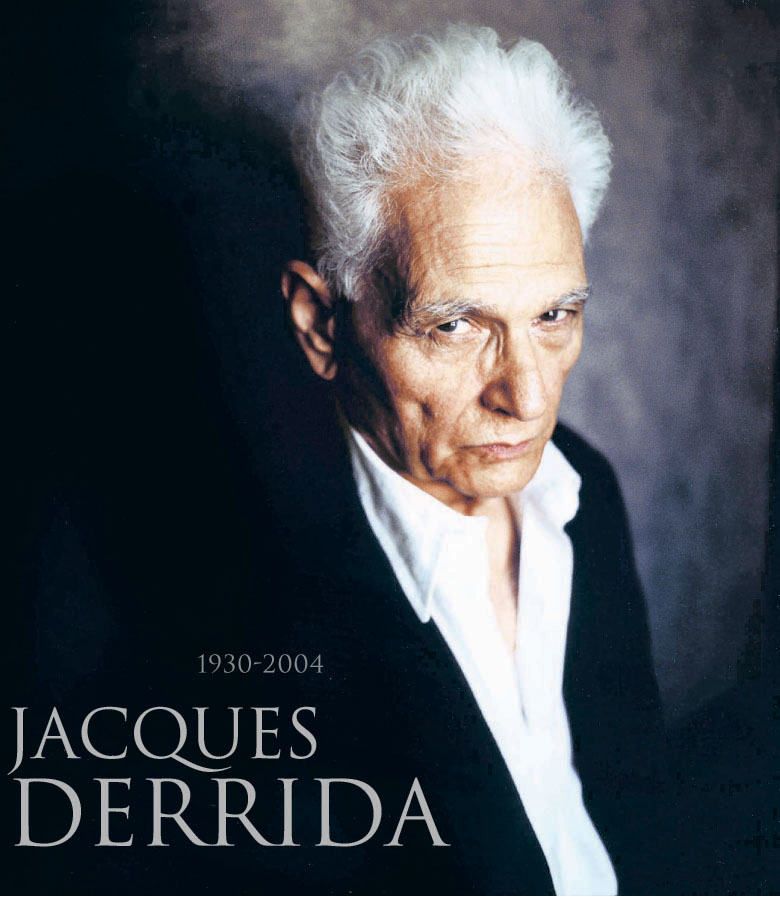
From another session where Anjum Hasan, Gayatri Chakravorthi Spivac, Manu Jospeh, Chandrahas Chaudhari discussed what constitutes criticism, reviewing and appreciating books, literature. Criticizing any work is all about writing, thinking and building connections between them. We should always try to understand what writer wants to say. Thirty fourty years ago when the voices of oppressed and downtrodden were started to be echoed in the sub-altern   literature it was largely following tradition of powerful convictions of French deconstructionists.
“You cannot approach subaltern with metaphor. You have to be direct, explicit, provocative and honest in your submission.”

Manu Joseph, writer of a novel ‘Serious Men’, referred cook Rat in a movie ‘Ratatouille’. The protagonist in this movie describes the great experiments Rat cook does while being in Paris. Role of critic or reviewer is not to write what people want to read. One cannot be good critic who wants to play safe. Great artist/writer can come from anywhere no matter what the background is. Christhopher Ricks said that we have to remember where the technique starts and where it ends. We have to rehear and reimagine the  ways of interpreating literature. Wit is so important a weapon in inspecting the opinions and review, critic gives a sharp way of doing it. We have to develop analytical skills, sensibility of method, how much a personality has invested in understanding the thoughts and arguments in the book. He also said that there is a difference between what critic from academia writes and that what reviewer from media writes about contemporary and historical books. Reviewers educational background may help them to become critic but reviewer`s ability to connect to the thinking, aspirations of readers is better suited to them to become a dependable reviewer. Criticism brings in lot of information about the history of the subject of text, knowledge about the diversity, problem areas, arguments existing, evolving in literature and thus the ability to analyze the complex texts. Reviewers have to do the same thing considering the positive intention of the readers towards the books which they might read after going through the review.

Anjum Hasan referred to Amit Chaoudhari who analyses often the necessity to go beyond virtues of ‘cultural nationalism’; creating inhabitation of our self transcends national, racial, regional boundaries. Local, nuanced and thematic appreciation of the making of the book leads to global because the original virtues are essentially diverse, located in specific locality and always having special ecology.  What writer is doing has direct connections with a theory put by Ronald Barthez  i.e. Death of Author. Sometimes believing the ‘death of an author’ after the book has been published may infuse limitations in our assessment of the work. We have to understand how author has negotiated self with text; what exactly author is doing, rather than what author has said in a text? What about mind behind writing? When asked by someone  that for a common reader who does not know deconstruction by Derrida, Foucault how meaningful and relevant can be book criticism and book review then panel replied that we should be able to give entire picture, spectrum of arguments from contemporary, literary history so as to respect freedom of readers mind to think about it proactively.


Gayatri Spivac said that criticism can become boring as a teaching subject except when one looks at it out of historical context. “First we have to teach how to perform a reading of a text”, she said. Ranajit Guha, Dipesh Chakravarty have written extensively about sub-altern movement and literature. By invoking Derrida, she said that “Reason” remains the principle weapon behind the strengthening of sub-altern voices. But we have to be sensible for understanding the difference between “reason” and “reasonable”. For fearless critic of writers, we have to expand our reading base. By consistent reading we have to manage to discover unearthing gems from ocean of literary criticism.

Finally Anjum Hasan said that book reviewer should not be a reviewer alone, they should do their other day jobs. By just being book reviewer, one can become monotonous, narrow minded conservative in assessing books through one lens only. We have to be grateful by acknowledging the great legacy of work done in particular theme because we cannot move ahead in reviewing any work without reflecting on the great body of work done previously either supporting or rejecting our point of view. Every work has great historical relationship with previously published equally and more compelling works so listening, reading of those voices is very significant process while reviewing, criticizing upcoming work. It must be remembered that reviewing is not being judgmental. Quick opinion must not be confused with slowly developed argument. Our judgment has to evolve through carefully crafted through arguments. In a way book-reviewing and book-criticism has a long way to go in India.

Its all about engagement with a text, culture and minds. Review is a bit follower of charm of writing but critic may patronize particular tradition of the intellectual history while finalizing the critic of new books. Panel expressed their unhappiness over the fact that book reviewing and book criticism has become hostage to the marketing, advertising, and promotion professionals in India and therefore one can get swayed away by torrent of PR so as to ignore original/harsh reviews.

“Colonization of mind through English language was another issue of discussion of another session where diplomat Pawan Verma, journalist Ravish Kumar, critic Ashok Vajpayee, academic and write Uday Narayan Singh, write Ira Pande were discussing the dialectic between Hindi and English. All of them agreed that Hindi has become colonial ‘English’ for all of the Indians in a way we can’t live without it but still being hegemonised by it. In session, The Vanishing Present:Post Colonial Critiques Anjum Hasan interviewed Gayatri Chakravorthy Spivok and Amit Chaoudhari. They discussed literature in the era of globalization, ethical impulse s in literature, relevance of aesthetics education, status of education in 21st century and place of literature in university.

Prof. Spivac expressed great anguish that place of literature in university is vanishing slowly. You can’t train youngsters to read literature by emphasizing on the value or benefits of it. We have to sensitize about the process of how literature evolves in our life, how words get expression. We have to engage students in a dialogue about how to train our mind deeply into ethical impulse of literature with our whole soul, body and mind. We have to train our imagination though active imagination to change the ways of how we know.
Amit said that we have to imagine for whom we are writing for, who our foreign audiences are. While reading a text, we have to be aware about what the literary affiliations of the author are and what the literary arguments of author are. We have to understand how author creates oneness with readers? Assessing Literature is a very complex field. Current post-colonial literature suffers with a problem that it has allowed to glorify exotication of everything, language estrangement. There are different feelings about how we should write about different places. There is a special mythology about exoticizing we need to move away from. We have to develop a way to read things which have travelled. Globalization and changing profile of readership is compelling us to look towards literature and readership in a certain prejudiced way. English being engine of globalization, there are massive forces which are impacting provincialising of literature. German and French provinces of literature have their own way in thinking about life. We have to be aware about increasing trend in masses of writers in India who are thinking in English so not able to express themselves the issues from the roots here.

Discussing question that “Is reading literature an ethical practice?” Prof. Spivac said that We read to transform ourselves. We constantly try to learn through languages, books, experience, events, and processes. Literature allows us freedom to act of becoming different person, to feel unique experiences characters in book are having and thinking each jeanre in text is giving. Like Marathi poet Arun Kolhatkar, who used to say that I keep my pencil sharpened at both ends and I believe to write away from King`s English. Same was reflected when Bhalchandra Nemade was talking about his novel Kosla.

All the Ideas of Republic were at the forefront on 26th January for confrontational debate on different stages named ‘Republic of Ideas’ participated by Tarun Tejpal, Patrik French, Ashish Nandy, Richard Sorabji, Urvashi Butalia. Another session on same day was devoted to ‘ Freedom of Speech and Expression’. The row created by previous session justified the perfect positioning of later. Ashish Nandy in his complex argument dealt with idea of equality in Indian context being strengthened by unavoidable evolution of corruption in all castes, classes and creeds leading towards making Indian republic more robust, vibrant and thriving living up to the great struggle of social and political movements our country witnessed for equal opportunities, justice and well-being to all kinds of people. This particular way of presenting argument received conservative political/social response leading towards exit of Prof. Nandy from the festival.


Session of freedom of expression was presented by John Kampfner, Shoma Chaudhury, John Burnside, Basharat Peer and Timothy Ash. This session greatly dealt with how government authorities react to the freedom of expression and how public deal with notion of free expression. To how much degree there is a desire in public to accept or be flexible to take offense. In todays India, we take freedom of expression for granted. Questioning the Article 19 (2) and its provisions which list the exceptions under which our right of freedom of expression can be repealed, is the need of the hour. In the age of “Market of Ideas”, we are debating democratic processes.  While discussing the freedom of expression there are two areas where the contestation about this is most prevalent; in cultural production and in public discourse. In creative culture production industry there must be freedom to experiment with text, art-form and craft unless it provokes communal disharmony and violence. In democratic/public discourse we have to develop senses, culture and environment where we respect the culture to take offenses in constructive ways. Freedom of expression in armchair activism has also created many problems, by taking absolute freedom.


Police are doing surveillance of press activities. Lot of magazines, newspapers remains dependent on advertisements given by central government agencies like DAVP etc. Legal threats, possibility of hacking by state/non-state actors are also possibility. Our laws give sanction to legislative actions if legislature is not satisfied with the coverage of specific issue. All those discussions were tested immediately in the real-time of festival as all types of threats were exercised on Prof.Nandy from boycott to arrest. 
==================================

Tuesday, January 29, 2013

The Idea of Republic Vs Culture of Intolerance

The confluence of 
clash of ideas, isms, culture, history, reflections...
 
http://jaipurliteraturefestival.wordpress.com/

Our scientific experiment: Deepak Pental in The Indian Express

Fri Jan 18 2013, 02:57 hrs
 
Of all the nations that got freedom from the colonial powers in the 20th century, India had the most progressive leadership, not only in political thinking but also in science and technology. Almost everyone admires and appreciates Jawaharlal Nehru’s passion for science and technology, both for the economic well-being of the country and for deepening secular values through the development of a scientific temper. Fortunately, all those who have followed him have more or less been benevolent towards science and technology. However, a passionate approach towards advancing science and technology has been missing among the political class, policy-makers and science-technology practicing community. That is why, in spite of a visionary start, we are still struggling to be counted as a big science and technology nation. In general, we are people with a quasi-feudal mentality. Hierarchies are more important to us than passion for knowledge. Rituals and superstitions come more naturally to us than a scientific temper.Although the scientific community will claim to be more progressive than society at large, a quest for exclusivity, a bureaucratic disposition and comfort with mediocrity are hallmarks of India’s science and technology community. There is a deep sense of inferiority to western science, although there is a general lack of desire to follow the good practices of science and technology management in the western countries. 


The Science, Technology and Innovation (STI) Policy 2013, authored by the ministry of science and technology and released at the 100th Indian Science Congress in Kolkata, unfortunately reflects all these propensities. It is a tepid document, full of wishes and desires, but it hardly describes any structural or procedural changes which will achieve the grand goal of integrating science, technology and innovation to create value in an inclusive manner. The declaration lists 12 points to capture India’s aspirations in STI — promoting the spread of scientific temper; enhancing skills; making careers in science, research and innovation attractive; establishing world-class infrastructure and gaining global leadership in select frontier areas; making India among the five top global scientific powers; enhanced private-sector participation in research and development (R&D) and converting it into applications through a PPP model; seeding science and technology based high-risk innovations. All of these aim to create a robust national innovation system.
Haven’t we wished all this before? Various departments of the science and technology ministry, as well as other ministries, continue to run scores of schemes trying to promote all these facets. In fact, there is a tendency to start new programmes and let the existing ones decay. What we need is an honest appraisal of all the schemes and learn from both the failures and the successes. Unfortunately, the cultural deficits of Indian society and the scientific community cannot be easily wished away. The hope lies in making structural changes that will circumvent our cultural deficit and break the vicious cycle of over-bureaucratisation in science and technology and comfort with mediocrity.

Here I will suggest some structural changes in the way we deal with STI issues which may bring better dividends. India’s grand challenge lies neither in science nor in innovation. Great insights in science cannot be seeded or wished for, they just happen, provided there is passion for knowledge in society. In innovation, India has done well. A recent report on India’s STI achievements commends it for frugal innovations. With India’s brightest opting for engineering and management degrees, innovation is bound to happen. What we should worry about more is creating a science-technology interface to develop robust technologies for meeting national needs and for the creation of wealth. This is where organized thinking and a proper policy framework could be most useful.

The most appropriate vehicle for supporting science, and a science and technology interface, is a competitive grants system funded by public money. All strong science and technology countries have excellent competitive grants systems where scientists and technologists individually, and more recently in large consortia, submit R&D projects that are reviewed and funded. Fortunately, in India, all the science departments have competitive grants systems for funding R&D projects. However, there are too many schemes and decision-making is excruciatingly slow. The most important innovation we require is a proposal tracking system that will track the progress of the proposal from submission to peer review to rejection or acceptance to final release of the grant. Currently, these procedures are taking about one to two years. If we care for science and technology, we need to cut short this time to six months. In any case, science departments very urgently require enterprise resource planning to streamline their processes. Innovation should start from the science departments itself.

The second important structural change is comprehensive funding of R&D projects, at least to the universities and public institutions. With the increased funding for R&D promised in the 12th plan, there is no reason to keep the concept of comprehensive funding out of the reckoning. This will bust the ill-conceived design of keeping universities starved of research funding.

Once the project is sanctioned, investigators should be given the freedom to use funding earmarked for consumables and procuring services without bureaucratic hassles in their own institutes. The vice-chancellors and directors of our universities and institutes must trust the scientific community to use the project funds properly.

Every effort should be made to expand and strengthen institutions that serve the cause of both teaching and research rather than to open exclusive research institutions around personalities. The culture of research institutes, in any case, is antithetical to creativity in the long run as scientists and technologists in such institutes do not teach and therefore do not contribute towards inspiring the next generation.

While some attempts are being made to attract young scientists and technologists who have drifted abroad for post-doctoral research back to the country, it is critical that a new generation of human resource is created by sending students for doctoral work in leading science and technology institutes across the world. The new IITs, central universities and Indian Institutes of Science and Education Research should be populated with such researchers and teachers, but our comfort with mediocrity is so high that we do not seem to care to look at a model through which East Asia, China and, more recently, Latin America have benefited tremendously.

All these structural changes can be carried to meet India’s science and technology aspirations, but implementing them will require strong convictions and the ability to cut through the current policy haze. Otherwise, wishes will mostly remain just wishes. 
==============================================

Friday, December 14, 2012

Conserving VOICE of TRIBALS: If we do not do it now, tomorrow ours will be also in danger !

http://www.bhasharesearch.org/IntroductionFilm.html

http://www.adivasiacademy.org.in/Page2.html?FirstName=introduction


Tuesday, November 20, 2012

Regulating Media: Series of Articles by "Reader`s Editor" in The Hindu

Regulating media - I 

(http://www.thehindu.com/opinion/Readers-Editor/regulating-media-i/article4041225.ece)

In India, the crisis came with the communal mobilisation in the run-up to the desecration of the Babri Masjid in 1992. A section of the media became the mouthpiece for bigotry and carried a series of inflammatory articles. The Union Government sought the opinion of the Press Council of India regarding “whether a procedure can be laid down to ensure that newspapers/magazines censured by the Press Council for breach of guidelines in connection with communal writings, can be deprived of incentives from government, such as advertisements et cetera, and whether the Press Council would be in a position to suggest what action should be taken when it holds a newspaper/magazine guilty of breach of guidelines.” 

Regulating media — 2 

(http://www.thehindu.com/opinion/Readers-Editor/regulating-media-2/article4064954.ece)

The 1990s also witnessed the power of the “paparazzi.” The death of Princess Diana was solely blamed on the media. Her brother, Earl Spencer, said: “I always believed the press would kill her in the end. But not even I could imagine that they would take such a direct hand in her death as seems to be the case.” Former editor of The New York Times and a celebrity columnist for that paper A.M. Rosenthal wrote: “Someday, I believe, the words of Earl Spencer will hang in the private offices of publishers, network chiefs, and print and electronic editors worthy of any respect or trust.” Then came the new charge against the media that it was in the tight, vice-like grip of spin doctors. The unparalleled power wielded by Alastair Campbell, also described as the super spin doctor, as the Director of Communications and Strategy for Prime Minister Tony Blair, further eroded the gloss on media. The Teflon coat was slowly wearing away.

Regulating media – 3 

(http://www.thehindu.com/opinion/Readers-Editor/regulating-media-3/article4088170.ece)

Jeffrey Dvorkin, Executive Director, Organization of News Ombudsmen, raises rather an alarming question: “The sacred independence of the press and the media in general has been an unquestioned attribute of free societies. Democracy is based on that independence and along with it, the duty of care of news organizations to have the freedom to write and broadcast what they deem appropriate without either government approval or condemnation. But what if, in a digital age, that assumption connecting journalism to democracy, is just outmoded, if not plain wrong?”

Regulating media - 4 

(http://www.thehindu.com/opinion/Readers-Editor/regulating-media-4/article4109063.ece)

Justice Katju irked broadcasters when he wanted them to come under the purview of the PCI, and the print media when he sought more powers to the PCI. In a resolution the PCI asked “the Union government to amend the Press Council Act, 1978, by bringing the electronic media within the purview of the Act, renaming it as The Media Council, and giving it more powers.” He also infuriated a section of the digital media activists as the resolution explicitly demanded that social media too come under the ambit of the PCI.

5) Regulating Media-5
http://www.thehindu.com/opinion/Readers-Editor/regulating-media-5/article4133848.ece

There is a context to Justice Markandey Katju’s demand for more powers to the Press Council of India (PCI) and to widen its ambit to include electronic media and social media. The 2009 general election witnessed a unique convergence of vested interests — undue political advantage due to unscrupulous reporting practice — a phenomenon called paid news. The PCI formed a two-member subcommittee comprising Paranjoy Guha Thakurta and K. Sreenivas Reddy to examine the full import of the paid news scandal.

6)  Regulating Media-6
http://www.thehindu.com/opinion/Readers-Editor/regulating-media-6/article4156925.ece

Since 2006 the Readers’ Editor of this newspaper has been functioning as a self-regulator. The readers and the editors of this newspaper were unequivocal in endorsing its role in upholding cardinal principles of good journalism. It is worth reiterating some of the key elements that govern the Readers’ Editor. “By virtue of the terms of appointment, he or she is independent of the Editor, the editorial personnel, and the editorial process. The key objectives of this appointment are ‘to institutionalise the practice of self-regulation, accountability, and transparency; to create a new visible framework to improve accuracy, verification, and standards in the newspaper; and to strengthen bonds between the newspaper and its millions of print platform and online readers’.” If this system is extended across all media houses, I am sure the chorus to rein in media will lose its bite.

7) N. Ram`s Essay: Sharing the Best and the Worst: The Indian news media in a global context (http://www.thehindu.com/news/resources/sharing-the-best-and-the-worst-the-indian-news-media-in-a-global-context/article3971672.ece)

 The Indian press is more than two centuries old. It has always been a highly political press. Its strengths have largely been shaped by its historical experience and, in particular, by its association with the freedom struggle as well as movements for social emancipation, reform, and amelioration.The long struggle for independence; the sharp ideological and political divides; controversies and battles over social reform; radical and revolutionary aspirations and movements; compromising as well as fighting tendencies; and the competition between self-serving and public service visions of journalism –these have all found reflection in the character and performance of the Indian press over the truly long term(Ram 2000: 242).Even in the pre-Independence context, the press learned to act like a player in the major league political and socio-economic arena, despite its well-known limitations in terms of reach in society, financial viability, professional training, and entrepreneurial and management capabilities.This rich history accounts for the seriousness, relevance, and public-spirited orientation of the press at its best.


8)Alan Rusbridger, Editor, The Guardian delivers the 2011 Orwell lecture – video

http://www.guardian.co.uk/media/video/2011/nov/11/alan-rusbridger-orwell-lecture-2011-video

---------------------------------------------------------------------

Tuesday, October 16, 2012

Integration Vs. Synthesis: From Singular quest to Multidisciplinarity!


Remembering VERSATILE Tapas Majumdar: A Colloquium on Discourses across Boundaries (JNU, 15 October 2012)

 When a child enters a school, the world for it is homogeneous in a sense that is not compartmentalized in the boundaries of knowledge. School, college and university education makes us think in the direction of dividing the attributes of particular event, object or phenomenon in respective academic or knowledge disciplines. All problems are necessarily multidisciplinary. We cannot run away from the fact that all things happening in our lives have been by default been described by nature through its diverse/multifaceted/versatile characters which we try to decipher through our limitations-- of knowledge, method of inquiry and frame of observation.

Aim of any knowledge system is not only expose/investigate/treat facts thus to arrive at a qualitative/quantitative interpretation but also to simulate different versions of truths. This requires convergence of different frames of inquiry drawn from different disciplinary boundaries. We know the traditional Hegelian approach of Synthesis in which there is confluence of thesis, antithesis leading towards synthesis.
  • The thesis is an intellectual proposition.
  • The antithesis is simply the negation of the thesis, a reaction to the proposition.
  • The synthesis solves the conflict between the thesis and antithesis by reconciling their common truths, and forming a new proposition.
But convergence of methodologies or cognitive paradigms which govern the holistic understanding of the problem is not merely the objective of interdisciplinary or multidisciplinary education or research. Objective is to cross boundaries in such a way that there are some possibilities of amalgamation of not only different set of perspectives emerging out of different knowledges but also amalgamation of research orientations derived from multiple knowledges, methods and ways of inquiry. Slowly we realize that disciplinary boundaries disappear with the ongoing quest of knowledge.

In Indian context, university model developed and build over the years is largely oriented towards training and nurturing human capital through different disciplines of humanities, social sciences, engineering, medicine, sciences, mathematics, traditional knowledge etc. It would not be a ambitious overstatement to say that our education system to a large extent and research system to a lesser extent has not evolved keeping in mind; addressing the problems. Considering schools, colleges and universities are being one of the most democratic institutions in modern India, this issue needs to be addressed with more urgency and rigor.

Great discoveries are inspired by junctions of openness. Ideas come through open interaction, debate and introspection. The formal system of education is not structured to achieve this. Even the so called ‘interdisciplinary approaches’ also rely on merely combining and organizing different disciplinary perspectives for the sake of lip service. Having understood that for serious research efforts, one needs to be firmly grounded in some discipline/discipline, merely this groundedness sometimes comes in the way of honestly committing towards leaving the boundaries of one's fortress of knowledge and move towards learning new tools/methods/techniques from other field of inquiry.

Interdisciplinary or multidisciplinary approach comes through emphasis on reason. Whenever there is vacuum in society in a sense that faculties of reason are demolished then one faces with problems of fundamentalism, ignorance, obscurantism and faith which compel elements of our society to fight with each other without appreciating the bigger problems of the day like development, education, health, nutrition, employment, livelihood, communal harmony, regional disparity etc.

Essence of scientific imagination is to transcend the limit of boundaries. Disappearing of boundaries of inquiry should happen with some human concern. The problem oriented approach comes handy when thinking about the ways to do this. Human mind is evolved to think both implicitly and explicitly. We think in terms of social, psychological, biological conceptions of life. Thus capacity of human mind is certainly enhanced by other faculties of science, technology, new kind of communication tools developed, new depths acquired in different field of knowledge. Primarily language is our prime asset to understand and exchange all the knowledge. But it is the cognitive faculties of our mind that determines the possibilities of greater in-depth participation in informal/natural/symbiotic/organic interdisciplinary thinking.

Let us summarize why interdisciplinary/multidisciplinary research is of paramount importance and how it can change following situations.
a) Already well established dominance of formalism and positivist approaches in research needs to be altered/reshaped to imbibe convergence of different ways of inquiry shaped by qualitative investigation.
b) Poor state of primary, secondary and tertiary education
c) Mood of the times: Local, isolated and dispersed reasons for having interdisciplinarity
d) Higher education basically driven by single discipline driven agenda

In short, disciplinary boundaries need not limit our thinking. We have to appreciate inevitability of otherness. Mind is both enabler and enabling. If we deploy our mind in the direction of problem solving, then it always engages itself into free, random thinking about ways to solve the problems without carrying the baggage of from where the information, knowledge is coming from. It only searches for tools to solve the problems. Tools available in our life are products of cumulative application of different set of incrementally accumulated skill sets of knowledges. India is a rich legacy and history which talks about interdisciplinary inquiry. People like Surjo Kumar Chakravarty, Ravindranath Tagore, Vinay Sarkar, P.C. Ray, D.P.Mukherjee have shown us the way in this direction. 

Thus, principle challenge in front of us is to move from being A Researcher to that of A Proactive investigator of Human Concern. We have to move from Research Question to Problem Projection and continue this vice-versa journey untill the problems gets sufficient treatment.

-------------------------------------------------------------------

Thursday, July 19, 2012

Nonalignment 2.0: From Innovation to Confusion ?


India needs ‘NonAlignment 2.0', new policy report says

Special Correspondent (The Hindu Reported this story on 29 Feb 2012)

NonAlignment 2.0 chalks out foreign and strategic policy for India

Warning that the time for India to get its act together is now because of the favourable growth prospects, demographic profile and international environment it faces — all of which may subsequently change — a group of foreign policy experts released a report here on Tuesday, NonAlignment 2.0: A foreign and strategic policy for India in the 21st century, which identifies the basic principles and drivers that would make the country a leading player on the world stage while preserving its strategic autonomy and value system.
Unveiled before a packed audience of present and former National Security Advisers, Foreign Secretaries, Ambassadors and High Commissioners and policy wonks, NonAlignment 2.0 was written over 14 months of deliberations by Sunil Khilnani, Rajiv Kumar, Pratap Bhanu Mehta, Lt. Gen. (retd.) Prakash Menon, Nandan Nilekani, Srinath Raghavan, Shyam Saran and Siddharth Varadarajan. National Security Adviser Shivshankar Menon and Deputy National Security Advisers Alok Prasad and Latha Reddy also joined some of the deliberations.

As the report reiterated several times, the trends for India to extend its global role and influence are favourable but time is of essence. The basic structures suggested by the report must be quickly implemented because the “underlying factors that are propitious for our growth may not last long.” But the authors say India's big challenge will be to aim at not just being powerful but to set new standards for what the powerful must do, because in international relations, “idealism not backed by power can be self-defeating and power not backed by the power of ideas can be blind.” India's legitimacy in the world will come from its ability to stand for the highest human and universal values and at the global level, “India must remain true to its aspiration of creating a new and alternative universality.”

In a situation where the world is no longer bifurcated between two dominant powers, nonalignment today will require managing complicated coalitions and opportunities in an environment that is not structurally settled, the report say. But former NSA Brajesh Mishra, who spoke at the launch, questioned the approach of the report, especially its view that India not take sides in the rivalry between China and the U.S. China's approach was that of the Middle Kingdom, it wants to be number one, and India's priority should be to build a closer partnership with Washington.

The report deals with India's approach towards the ‘Asian theatre,' the international order, hardpower, internal security, non-conventional security issues like energy and nuclear options, the knowledge and information foundations of power as well as the state and democracy.

NSA Shivshankar Menon commended the overall thrust of the report, especially the link made between the manner in which India dealt with its internal and external challenges. West Bengal Governor and former NSA M.K. Narayanan said the report should have devoted more attention to left wing extremism and questioned some of its conclusions on the internal security front.

The report emphasises that for its strategic and foreign policy to be successful, India must sustain domestic economic growth, social inclusion and democracy. Its approach must be to secure the maximum space possible for its own economic growth in order for the country to become reasonably prosperous and equitable. Although India's competitors will put roadblocks in its path, “the foundations of India's success will depend on its developmental model.”

http://cprindia.org/workingpapers/3844-nonalignment-20-foreign-and-strategic-policy-india-twenty-first-century
------------------------------------

Between friends and rivals

Seema Sirohi (The Hindu reported this story on 10 July 2012

A U.S. critique of Nonalignment 2.0 says the report’s fundamental flaw is the gap between its realist reading of world politics and its idealistic solutions

Whether India should lean west, look east, walk straight, stand at attention in a tough neighbourhood, or be at ease with a giant, fast-paced China are important questions for policymakers. Earlier this year a group of Indian analysts made a serious attempt to provide answers in Nonalignment 2.0, charting a grand strategy while trying to plant firm feet in a shifty and shifting global environment.

The release of Nonalignment 2.0 was greeted mostly with criticism, some of it eviscerating, some breezy and some undeserved. The title itself set off fireworks, from Delhi to Washington, preventing many critics from looking beyond initial outrage and into the text, so discombobulated they were at the very thought of reviving a term they had buried with the Cold War. But the same title gave comfort to others who still believe in the magic realism of nonalignment.

Perhaps it follows that the report had no separate chapter or detailed analysis of India-U.S. relations and how the 2008 civil-nuclear agreement changed the strategic environment for India. Another country to escape all notice and acknowledgement was Israel despite the increasingly tight defence relationship.
Nonaligment 2.0 mentions the United States only in a tertiary and sometimes even in a backhanded manner, much to the quiet chagrin of India’s supporters in Washington.

This when for at least the past decade and through two prime ministers, a string of superlatives upon hyperbole — “the defining partnership of the 21st century,” “natural partners,” “engaged democracies” — has described the growing relationship. One of the authors, explaining the missing link to Washingtonians, recently said the U.S. was “a running thread” in the document, an assumed presence. It didn’t wash.

Analysis

It is no surprise then that the most detailed critique of Nonalignment 2.0 yet should come from Washington. Ashley Tellis, one of the most respected strategic thinkers and a key voice on India-U.S. relations, gives Nonalignment 2.0 the thorough attention it deserves minus the acidity of an ideological takedown. But a takedown it is, albeit a considered one. Tellis assesses its prescriptions in almost as much detail as the writers do in laying out their premise. And then goes about systematically countering each one of the national security recommendations.

Nonalignment Redux: Perils of Old Wine in New Skins, to be released early July by the Carnegie Endowment, may raise tempers but it shouldn't be ignored. Tellis is all praise for the document’s strong advocacy of economic liberalisation for India and greater integration with the world. Its declaration that globalisation presents more opportunities than risks is music to his ears. The enthusiasm for an open economy is surely a huge leap forward from nonalignment 1.0, and has enormous implications.

The second track of argument in Nonalignment 2.0 is strengthening of Indian democracy as a “strategic” task for a nation burdened by rising aspirations and ineffective delivery systems. Tellis finds an “honest and penetrating assessment” of India’s democratic condition but evasion in the answers. While Nonalignment 2.0 endorses the current government’s effort to create “a rights-based welfare state” where citizens are provided all basic needs, it does not address the question of costs. The price tag “could actually end up undermining the larger economic growth that is critical for India’s success,” according to Tellis.

The third and perhaps the most important strand in Nonalignment 2.0 is the discussion of national security into which the previous two streams flow. And on this Tellis’ hammer comes down hard and repeatedly. For him the report’s fundamental flaw lies in the gap between its realist reading of world politics and its idealist solutions. He finds the report’s embrace of nonalignment as the best organising principle for India’s relations with the world as “misconceived and downright dangerous” even when disguised as strategic autonomy.
All countries want to preserve their physical security and autonomy of decision-making to the extent possible so India’s quest for “strategic autonomy” is not unique, he says. The desired end is the same for all. Tellis contends that the original idea of nonalignment was about the “means” to get there by staying clear of both blocs. It was a method for the madness of the Cold War. Nonalignment 2.0, however, “conflates the ends and means” of nonalignment and resurrects the concept with “avoidance of sharp choices.” That in short means not choosing the U.S.

China factor

Ironically, even though the report regards China as the greatest challenge for India and agrees there is a meeting of minds with the U.S. on this perception, it advises against a closer partnership with Washington. “By so doing, Nonalignment 2.0 fails to appreciate the central paradox of our times: Strategic autonomy is best achieved through a set of deep strategic partnerships among friends and allies,” Tellis concludes. Contrary to the report’s assumptions, India may not have the luxury of choices the authors envision and even if it does, all partners are not created equal. India can’t afford “allying with none” given the differential of power with China and the report’s own analysis.

The “faulty” conclusions, according to Tellis, may be because the authors begin with a faulty premise. The key question should be whether India needs partners to realise its political aims and who best fits that purpose. Instead, Nonalignment 2.0 frames India’s primary challenge as its ability to leverage the interests of various rivals seeking its hand. In that it exaggerates India’s geopolitical importance and bargaining capacity. Tellis finds this “solipsism” dangerous because it presumes that the U.S. needs India more than India might in case of an eventuality vis-à-vis China. He finds it counterproductive because the smugness prevents genuine cooperation with the US.

India would be better served by “a sturdy ring” of relationships with countries near and far because it would create “objective constraint on China’s misuse of power,” according to Tellis. But Nonalignment 2.0 walks gingerly around China, saying India should not get into relationships that go beyond “a certain threat threshold in Chinese perceptions.” The worry whether the U.S. would come to India’s rescue in case of a Sino-Indian conflict is genuine but it would be real only if India “chooses a priori” not to develop a meaningful partnership with the U.S. The U.S. then would have no incentive to take on China for India.
But interestingly, the U.S. is not seeking an alliance against China despite the persistent commentary to that effect, because “strategic coordination” and a deep partnership would suffice, Tellis says. Finally, the question is would India realise its power and potential when the U.S. is preeminent or another country? Washington is a cheerleader for a stronger India while China busily strings pearls around.
Tellis’ assessment is organic food for thought and it should widen the debate.
(Seema Sirohi is a Washington-based journalist.)