Tuesday, December 20, 2011

From Rio to Durban- From Uncertainty to Certainty towards Skepticism !


Excerpts from Book Launch: New Delhi, 19th Dec. 2011
[ Samjay Baru, Nitin Desai, Amita Baviskar, Navroj Dubhash ]


From Rio to Durban much water has flown under the bridge of climate change and in the river of geopolitics. Now comes the Handbook of Climate Change and India: Development, Politics and Governance edited by Navroz Dubhash of Centre for Policy Research. In the view of less informed foreign policy debate surrounding climate change and absent domestic nuances in the political discourse, this book is a hope for adding the diverse colours from the scientific end to the development aspects with clear focus on issues which otherwise we brush under the carpet as isolated vested interest issues present on the corporate coffee tables and gravitating in the dynamics of movements.

One thing is clear. Despite the East Angila University inspired Climategate fiasco, which largely heightened the suspicions and attacks because of exaggerated claims and data pushing the hysteria of climate change, the consensus of its existence remains and continues to be proved by new evidences being given by IPCC and its Assessment Reports. Still, there are lots of question marks on climate change and scientists are working hard (?) to answer that. Thus uptill now, having science of climate change largely established (except report Climate Change Reconsidered), today it can be said that economics and sociology have taken over as far as latest discourses about impacts of climate change are concerned. These discourses are largely concerned about development implications of the climate change along with equally significant aspect of geopolitics of negotiations in these issues.  

Science of climate change is very well enmeshed with the non-scientific dimensions of the debate. Increasingly the summits, negotiations, vocabulary of the debate is shifting towards or being oriented towards development priorities. We have to remember with cautionary hindsight and skeptical foresight that climate change is still an evolving issue. Scholars have to admit that we should not jump in the well and start beating drum for it twenty-four-seven. Lot of experts in this field are relying on definitive solutions. Climate change is just not a matter of negotiation; rather it is a matter of perseverance as far as realizing its huge network of factors causing it. Thus distinction between scientific answers and other enquiries is very essential.

The contents of the books (available below) does not hint at Indian intervention in the climate change scientific research. There is urgent need to develop an Indian perspective in all the aspects of climate change debate. Informed debate among scholars will certainly create a healthy environment for where policymakers, political leadership and bureaucracy will then be driven by evidences, data and authentic perspectives. Also, there is a need of an independent view to respond to the geopolitics of climate change. Cumulatively, this debate is being enmeshed in the contexts of structured changes observed in the economy in last few years, especially financial, debt crisis in developed world, food, and natural resources crisis in developing & least developed countries. In a way it has become a function of dynamics in global private assets vs. global commons.

Causes of climate change are surely embedded in industrial growth. Rise of the rest and the decline of the west is becoming sure possibility. From Bali action plan to Durban summit, the economic policy is clearly seen to drive the debate and instincts about the negotiations. Especially Copenhagen accord which proved to be disaster was a strong indicator of that. We should emerge to evolve the strategies to manage these changes. Therefore more awareness in all quarters of society is needed to establish control over changing relationships. Equations about recently formed BASIC group formulation may change, as we do not know what will be scenario in two three decades from now. India should take care to see that it should not lock itself in any kind of impossible commitment or promised prison due to which it forever compromises its position on equitable sustainable development with uncompromised vision for global compliance of the “just” principles of climate change negotiations.

Experts talked about three missing elements out of this handbook. Firstly, it is missing comprehensive agenda for south Asia. SAARC countries should have calibrated strategy for all the possible issues of negotiations and thus strategy formulation in coming times. South Asia being one of the largest geoeconomically homogeneous entity sharing common natural resources of rivers, glaciers, mountains, geography. This book also needs another Indian point of view vis-à-vis SAARC view. Secondly, this book does not address migration issue in depth. As human being, migration has been unstoppable event in all evolutionary history uptill now. Regimes of VISA are primarily established post world war II. In the times when the political entities have frozen the geoeconomically dynamic migration which is done by survival instincts will definitely shape the climate change debate in different direction once these political borders are subjected to change in next few decades. Thirdly, the issue of energy security has been inadequately dealt here. Search for new energy sources, investment in different energy technologies, access-pricing-marketing aspects of new technology is very crucial issues needing immediate attention. In the context of all these issues concerned, how concepts of adaptation and mitigation are going to change in the Indian contexts remains to be seen and to be studied. Thus energy solutions equally for economic growth and sustainable development will be the main challenge ahead of these studies, research and development.

Debate about climate change is shaped by normative criteria in recent times coming up more with policy prescriptions rather than policy prescriptions. While doing these intelligent, innovative suggestions need to be pursued. The kind of suggestions/prescriptions are being made to the agencies/institutions cannot be realized because there track record in appreciating the concerns of development is not upto satisfactory level. In contemporary times, when economic growth is top most priority of the government how it can be expected that it will deliver on the promises of inclusion, conservation and preservation. Problems, prospects and possibilities of distorted climate change debate remain on the cards. All the debate about seems to be driven by ambitious nationalism. There has been no indication or hint towards domestic economic processes. There are huge disparities in every sector of economy and in every walk of life. But there has been studied silence on all of these issues during major climate change related debates or coverage in the media.

Issues of equity seem to have been sidelined under the guise of low emission per capita in India. Insecurity and uncertainty of the poor have been neglected systematically. Environmental fluctuation and its impact have not been addressed in sound manner. Hard life, struggle and crisis in social ambience of the country seem to have disappeared from the radar of research in climate change. Thus safeguarding future is less a priority as against planning of strategies for negotiations. The issues of environmental conflicts and sacred landscapes have been completely forgotten. The crucial aspects of safety, shelter, sanitation, and livelihood have been sidelined. Vulnerabilities to glaciers, coastlines, marine geology and other natural commons have gone deliberately unnoticed. In the view of large models, much of the attention is directed at state; seeking its intervention or welfare wisdom to guide the community of scholars, professionals and practitioners.

But why this should be the only way to look at this process of fighting climate change, if it is happening any way? Where is the discussion about the pollution out of loot of mines and likewise locations. What politics will be mobilized to create awareness about this? How experience gained by social movements can contribute to understanding the complexity of the relation between climate change and development processes? How political ecology can address social justice issue. In the context of accelerated exploitation of the natural resources and labor forces how modes of production are changing or being utilized for narrow goals? How we can question, challenge commoditization and consumerist culture in today’s times? How major alternative streams of politics view these debates about climate change and are we going to recognize those voices? These all questions need to be asked again and again when we realize that climate change discourse is hell bent to discuss only pattern/model of growth. This is significant when we recall Mahatma Gandhi`s need vs. greed argument.  

The government mechanisms and institutions which are dealing with the climate change policy need massive reform as they have hegemonised and dominated by same stagnated perspectives since long time. The understanding about power equations, how it drives development agenda and what decides power dynamics is utmost important to understand while throwing any political argument about climate change. Ultimately, this is turning out to be fight between global vs local commons, let alone between treaty, negotiations or bargaining trade-off between institutions, economies and countries.

------------------------------------------------------


Handbook of Climate Change and India: Development, Politics and Governance
Edited by Navroz K. Dubash

Contents

Foreword by Jairam Ramesh

Acknowledgements
Introduction Navroz K. Dubash

Section I. Climate Science and Potential Impacts
1. Impacts of Climate Change on India J. Srinivasan

2. Sea Level Rise: Impact on Major Infrastructure, Ecosystems and Land Along the Tamil Nadu Coast Sujatha Byravan, Sudhir Chella Rajan and Rajesh Rangarajan

3. Impact of Climate Change on a Shift of the Apple Belt in Himachal Pradesh, India Ranbir Singh Rana, R.M. Bhagat, Vaibhav Kalia and Harbans Lal

4. India in the Intergovernmental Panel on Climate Change R. Ramachandran


Section II. Past as Prologue: Early Indian Perspectives on Climate Change

5. Global Warming in an Unequal World: A Case of Environmental Colonialism

Select Excerpts Anil Agarwal and Sunita Narain

6. Present at the Creation: The Making of the Framework Convention on Climate Change Chandrashekhar Dasgupta


Section III. The International Climate Negotiations: Stakes, Debates and Dilemmas

7. International Climate Negotiations and India’s Role
Sandeep Sengupta

8. The Reach and Limits of the Principle of Common but Differentiated Responsibilities and Respective Capabilities in the Climate Change Regime Lavanya Rajamani

9. Equity and Burden Sharing in Emission Scenarios: A Carbon Budget Approach
T. Jayaraman, Tejal Kanitkar and Mario D’Souza

10. Equity in Climate Change: the Range of Metrics and Views
Narasimha Rao

11. Climate Change Debate: The Rationale of India’s Position
Prodipto Ghosh

12. India’s Official Position: A Critical View based on Science
D. Raghunandan

13. A View from the Outside: International Perspectives on India’s Climate Positions European Union - Bert Metz Bangladesh - Saleemul Huq

Philippines – Vicente Paolo Yu III China - Ying Chen USA - Michael Levi


Section IV. Domestic Politics of Climate Change
14. Climate Politics in India: Three Narratives Navroz K. Dubash

15. Climate Change and the Indian Environmental Movement Sharad Lele

16. Hiding behind the Poor Debate: A Synthetic Overview Shoibal Chakravarty and MV Ramana

17. Climate Change Debates in the Indian Parliament

Commentary: Suresh Prabhu

Excerpts from Lok Sabha Debates Excerpts from Rajya Sabha Debates

18. Climate Change and the Private Sector Tarun Das

19. Corporate Responses to Climate Change in India Simone Pulver
20. A Change in Climate? Trends in Climate Change Reportage in the Indian Print Media
Anu Jogesh


Section V. Integrating Climate Change and Development: a Sectoral View

21. Energy, Development and Climate Change Girish Sant and Ashwin Gambhir

22. Climate Change and Urbanization in India Partha Mukhopadhyay and Aromar Revi

23. Agriculture in the Environment: Are sustainable climate friendly systems possible in India? Rajeswari Raina

24. Framework for India’s Strategic Water Resource Management under a Changing Climate Himanshu Kulkarni and Himanshu Thakkar

25. Mitigation or Exploitation? The Climate Talks, REDD and Forest Areas Shankar Gopalakrishnan

26. The Technology Agenda Anand Patwardhan and Neha Umarji
Section VI. Looking to the Future

27. Mainstreaming Climate Change Shyam Saran

28. The Geopolitics of Climate Change Nitin Desai

 ----------------------------------------------

Tuesday, December 6, 2011

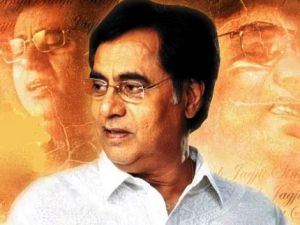
Dev and Jagjeet: Angel Ambassadors of Peace and Romance & Destroyers of Agony and Torment...!


“ Unki awaj me ek chain aur sukun tha...”, said Javed Akthar when Jagjeet went beyond horizons of pleasure and pain. Who knew that after few days another shaksha would go beyond the mysterious clouds of evergreen stardom to rest in the infinite memories. These memories of Dev sahab would come in the avatar of saffron clad Guide who tells us that he never regretted about anything he did passionately in his life: “ betrayles, heartbreaks ...but no regrets!”

Any deeply devoted personalities cannot be paraded just for arriving at some denominatory characterisation of their personification. But two of them can be said to have unique gift of touching hearts of the people who heard him or watched him on the screen. With the time becoming more and more fermeneted and water, air and land around us aggressively getting polluted, their audacity to soothen the massively troubled minds of common men and women was the hallmark of their existence in songs they stood for and thus charm of life those songs reflected.

Proffessional roles apart, what makes a person as a source of inspiration is their simple, elegant approach to the seemingly complex and difficult task of making each other happy. The spontaneous showering of pleasure and lateral reflections they exhibit about the connections of art and life are simply matter of daily practise for them. But still they nurture a kind of proffessional sophistication, very flexible but firm discipline about the performance they do and thus starting a informal conversation with the audience apart from their formal roles they do in studios and sets.

If Jagjeet gave classical gazal the modern outlook, Dev gave modern romance the vintage touch. Other day when I was reading one article about modernity by Dipesh Chakravarty where he says modernity is like a waiting room for many people simultaneously at any point of time in history. There is always rush in our lives to move ahead, to grow, to rise and to prosper. So, we are always trying to forget from where we arrived to that waiting room. We, due to hurry to confrm reservation to next milestone in life always struggle, fight and spread hatred in that waiting room. We want to travel by some train to reach our destination to achieve something. Jagjeet reminded us of our emotional connections to the heritage we left befind before leaving to catch the train. Dev consistently dragged us to the new voyages of train possible where he potrayed in front of us how easy it is to discover the romance with life at every station we arrive and still not forgetting the founding principles on which this outlier life started.

So, where is the vaccume? We express our condolences by saying that the person`s loss is irreparable and the vaccumen created because of their eternal journey can never be filled again. But mind again. If we think we cannot absorb what they radiated, if we feel helpless without their presence that is spiritual retardation of our minds which keeps us busy in thinking about our mortal inabilities. But think again for a second, if we truly loved the persons for whom we are grieving; we will never again disturb the people around us who are dedicated to the quest for cherishing moments of satisfaction. Dev and Jagjeet always tried to give those rare moments to the people with and for whom Jagjeet and Dev lived, and empowered their hopes towards illusionary-hopeless life.

Saturday, November 26, 2011

Science and Globalisation: Towards a changing notion of relationships between research and society


Reflections on Towards lnterdisciplinarity: 
"A Panel Discussion on Science and Globalisation"
 held in JNU on 25 November 2011


----------------------------------------------------------------

In a recently published book "Civilization: The West and the Rest", Historian Niall Ferguson tries to touch upon the root causes behind why western societies flourished and others did not. Few days before when Justice Katju was speaking on the eve of Nehru Memorial Lecture in JNU he appreciated to the great length the ancient heritage of Sanskrit and Urdu language embodying vast resources of rational scientific knowledge and also great literary potential. He appealed to the students present there to investigate the famous Joseph Needham question further asking why India and China did not have scientific-industrial revolution in 17th-18th century even though historically these countries were ahead in many areas of science-technology in medieval times. 

So, let us come back to the six reasons cited by Ferguson. Those are: 1.Competition, 2.Scientific Revolution, 3.Property Rights, 4.Modern Medicine, 5.Consumer Society and 6.The Work Ethic. According to Ferguson these "killer applications" were responsible for the emergence of western world in its current shape where they enjoy basic facilities of health, education and livelihood supported by formal/informal institutions of knowledge creation, diffusion and application of it. Further he says, these reasons were also responsible for the economic prosperity and thus the ability of western world to influence the modern institutions which regulate trade, research and development and international development agenda thus to leverage the benefits for the western world. Ferguson then says that in recent times developing world is downloading these applications much faster so as to catch up with the developed world.  Recent talk by Prof. Avijit Pathak who spoke about multiple modernities in India, concluded by saying that universities will be playing great role in the next wave of modenrity in the future of India by hinting that universities are one of the few places where secular, liberal and argumentative debate helps to unravel the complexities of not only multidisciplinary knowledges but also of the life.

In this context the panel discussion on the topic "Science and Globalization" touched the right nerve. When we are observing the huge influx and out flux of skilled communities across the borders, the changing nature of investments in R&D by multinationals in developing countries and the globalisation of higher education witnessing new transformation, one can sense the deep connection this panel discussion has to the unravelling of whole dynamics of the "Science and Globalization".

The discussion recognised that much of the scientific research is already globalised because it would not be a matter of conflict of opinion as far as consensus about basic principles of sciences is concerned. We are witnessing the globalization of economics compared to globalization of politics and science and technology. The much of the post-doctoral research is already globalized. Now it seems to be the case of globalization for doctoral, undergraduate and further for secondary education. Due to the invention of internet it is possible now to realize greater degree of collaboration between different institutions, countries and disciplines. The competition in the research and development in academic set up also enabled visualization of the possibilities for the new path breaking research.

Other point of view about globalisation focussed its enquiry about the social/cultural situations in which the development of science and technology takes place. The colonial/imperial history was largely responsible for the creation of institutions and practices, which were responsible for the development of S&T system in the developing countries. Historically Wilhelm von Humboldt inspired from Friedrich Schleiermacher’s liberal ideas about the importance of freedom, seminars, and laboratories founded Berlin University. This
model focussed on the goal to demonstrate the process of the discovery of knowledge and to teach students to “take account of fundamental laws of science in all their thinking.” Thus, seminars and laboratories started to evolve. Humboldt envisioned the university education as a student-centred activity of research.

Then the big thrust for the fundamental science in the western world was emphasised by the Vennever Bush`s 'Science: The Endless Frontier', a report which laid the foundation of massive investment in public funded research and thus paving the way for spillovers necessary for application of knowledge. The critical enquiries by Karl Popper, Thomas Kuhn and Robert Merton largely contributed to the understanding about how science progresses. The basic principles elucidated by Merton were Communism, Universalism, Disinterestedness, Organised skepticism. The Haldane principle which believes government should keep its nose out of decisions about research projects or programmes largely promoting the autonomy of the research and development and the 'Republic of Science' theorised by Michel Polyani was largely responsible for viewing research and development as an autonomous enterprise.

In particular reference with India, Humboldt model remains largely unrealized. In India fundamental research largely remained with the Council of Scientific and Industrial Research and other autonomous bodies outside the university system. This vacuum of fundamental research was also complemented by the fact that 94 % of the research and development funding was concentrated in the few establishments of government namely defense, atomic energy and agriculture institutions. While the synergy between teaching and research still remains to be strengthened in Indian universities it is also true that till recently there is very lopsided compared to the needs of culture where excellence is nurtured and resources are needed to promote that culture.

One of the significant issue out of this discussion was about commodification of the knowledge, freedom of enquiry and the societal relevance of the science-technology initiatives. Lot of issues of globalization are directly related to the economic aspects namely the product driven research, intellectual property protection of the knowledge and monopolization of the profits leading to the domination of access-benefit sharing mechanisms. The historic context of development of recombinant DNA technology and the cases which lead to the approval of human intervention in life systems so as to allow patenting anything under the sun (Diamond Vs Chakravarthy, Harvard Onco-mouse case) were largely responsible for the establishment of the international regimes like TRIPS, WIPO.  The success of intellectual property rights has been overestimated especially to realise invention, innovation, technology transfer, foreign direct investment, disclosure of knowledge.  

 The changing role of universities is also necessary to understand the 'globalisation' angle being discussed here. The role of universities is changing from Mode 1 
to mode 2 as argues by Gibbons and as conveyed by John Ziman the scientific knowledge being produced in the university system is transforming from that of 'reliable' towards that of 'robust' forms.  The historic peer review method where experts or scholars from particular knowledge discipline is actually under dynamic transformation. The people outside the peer review group are increasingly influencing the ‘construction of knowledges”.


Let me refer to an interview published in Nature. This interview report asks the question: "Is the model of research-intensive universities still valid at the beginning of the twenty-first century?” It says: "Outside the academic realm, the world has also changed markedly since von Humboldt's time. The ‘advanced’ nations have been moving away from the manufacturing-based economies that sustained them throughout the twentieth century, towards so-called knowledge-based economies that rely heavily on scientific research and a trained workforce. As such, these nations no longer compete for industrial capacity or access to natural resources, but rather for skilled workers, intellectual property and knowledge." Another respondent in this report says, "Research universities should fight the trend of becoming more and more specialized, and instead try to integrate undergraduate teaching and research to create a true community of scholars."(The future of research universities, EMBO reports (2007) 8, 804 - 810 * doi:10.1038/sj.embor.7401052 * http://www.nature.com/embor/journal/v8/n9/full/7401052.html)

 Another respondent says, “In many disciplines, the boundaries between basic and applied research are blurred. It is more of a continuum and one should think more in terms of short-term and long-term research. Hence, universities are moving toward supporting this continuum. With regard to intellectual property, universities and their faculty should have incentives to commercialize their discoveries and in doing so support economic development and job creation. However, universities should not become ‘greedy’ and they must realize that the intellectual property they generate is often only a small contribution to a product. They must learn to work more cooperatively with corporations on intellectual property creation, ownership and commercialization.”

The processes and goal of democratising science, issues of citizen science, hegemony and violence created by techno-scientific establishments were mentioned when the social aspects of this globalization of science were discussed.  In this kind of interdisciplinary interaction, some of the representatives expressed their dismay about their perception that science is largely being viewed from very negative perspective, which does not appreciate their efforts aimed at development. Also, lack of the meaningful institutions having capable people who can communicate the process of scientific discovery and people who can comment, write and mobilize debate about the science-technology policy in the country, the creation of environment where the challenges ahead of basic research can be deliberated upon by appreciating the ethos of science were also expressed by some members of the audience.

Eventually before leaving this particular report sharing the analysis of founding definition of globalisation in contemporary times given at (http://www.infed.org/biblio/globalization.htm)
“Globalization involves the diffusion of ideas, practices and technologies. It is something more than internationalization and universalization. It isn't simply modernization or westernization. It is certainly isn't just the liberalization of markets. Anthony Giddens has described globalization as 'the intensification of worldwide social relations which link distant localities in such a way that local happenings are shaped by events occurring many miles away and vice versa'. This involves a change in the way we understand geography and experience localness. As well as offering opportunity it brings with considerable risks linked, for example, to technological change.”

--------------------------------------------------------------------------------

Monday, November 7, 2011

Imagination reaches out repeatedly trying to achieve some higher level of understanding, until suddenly I find myself momentarily alone before one new corner of nature's pattern of beauty and true majesty revealed. That was my reward.---RICHARD FEYNMAN, 1965

Saturday, November 5, 2011

Politics of Climate Change and Nuclear Energy in Changing Politics of Germany


While the world is vigorously debating the future of nuclear energy, the negotiations about the climate change have also arrived at crucial stage when world leaders will meet in Durban. This will be crucial juncture in the line of negotiations after Cancun because it will unfold new story in the already well established boxing ring of unequal level playing field.

Cancun round changed the character of the developing countries. Developing countries mitigation targets were thus delinked from multilateral legally binding agreements. Now the Kyoto protocol seems to be out of question. There seems to be no compliance mechanism being enforced in future negotiations and implementation. Cancun has marked demise of Kyoto protocol and even country like Japan where it was signed is reluctant to go ahead with its implementation. Now the mitigation targets have been annexed. After departure of Kyoto protocol we will be left with the market mechanism of the voluntary mitigation strategies. So, once again we have arrived where we have started.

In the context of financial crisis it seems difficult that west will proceed with its pledge to provide 100 million dollars to developing countries for mitigation. Official development assistance has been diverted in the name of climate change fund. Also there are other issues of intellectual property, technology transfer etc.

Debate about nuclear energy is about debates about future energy mix. The societal estimation or risks are at the centre stage whenever the ethical aspects of any technology are discussed. Legal, moral and technical aspects dominate this discussion. When German Ethics Commission recommended to German government about phasing out of nuclear energy from their country by 2022, all these issues surfaced in the matrix of public sphere.

President of Ethics Commission Prof. Matthias Kleiner maintains that our role was only to feed political decision making process by wise analysis of the situation by aiming at the well being of the society in the long run. Economic growth and social balance remain at their own place. Probabilities of assessment were based on assumptions of costs, design limits, investments in alternative technologies, human resources available in different technology fields and many other aspects of how climate change policies will take its turn.

It is necessary that society as a whole understands its goal and the ways in which these goals can be realistically attained. The test of vision of German government lies in the fact that how it creates responsible methods and mechanisms through which it can monitor the progress towards these goals. The report at the outset sets the mandate for the preparations in coming years for making Germany self-reliant in the energy sector in the context of phasing out of nuclear energy. It says, “Objective of securing Germany`s future demands a consistent, target-oriented and politically-effective monitoring process (analysis, evaluation, guidance) which the report on the approach and institutions describes in more detail.” Ethics commission expresses its belief in scientific excellence Germany has nurtured over the decades and thus appeals to think about ‘sustainable economic management’. It explains that Germany is already on the way to develop the alternative technologies and it will be in good position to harness those technologies to dispense the nuclear energy.

Question is, what are the inspirations and motivations behind this strong self-confidence. It draws its strength from planning reliability and technological competitiveness. It also indicates towards a stable strategy for investments in energy supply systems and energy efficiency as well as the provision of infrastructure.

Germany has envisioned energy future in following three pillars of sustainability; an intact environment, social justice and healthy economic growth. The kind of social changes envisioned in the framework of energy transition has been understood to be based on the strong foundation of democratic consensus. But this term of shutting down does not mean complete withdrawal because this technical term indicates a far reaching process. But this comes with the realization that restructuring of the energy supply will have negative effects on economic development, employment and for people on lower incomes.

Ethics commission derives its inspiration from the strong belief that objective of ecological compatibility stands alongside social equilibrium and economic efficiency for collectively achieving a future oriented structure for society. Putting forth the comprehensive integrated approach and our ability to imagine, report says, “Consequences in terms of the environment and health should be paid the same amount of attention as the cultural, social, economic, individual and institutional implications. Reducing the risks down to purely technical aspects would not fulfil the requirement for an integrated approach und comprehensive assessment. The approach also includes the basic principle that the burdens are not passed along to the general public, although this happens all too often, as can be seen in the example of climate change. Awe for the task and humility in one’s own thoughts and actions are essential. The central problem is not what can be imagined but what cannot.”

Eventually report makes case for democratic and open societies providing for more choices to its decisions in following words, “The discussion of the ethical positions presupposes that there are alternatives to choose from. The statement that there is “no alternative” to something is no longer accepted by the public. This is also true for the use of nuclear energy. The claim of a “lack of alternatives” undermines the confidence in open, parliamentary democracy. It is more the case that alternatives create freedom for making decisions. Also, alternatives will be available to a greater extent, the more decentralized and differentiated that the energy supply is structured. This increases the citizens’ opportunities to participate in the decision-making process and to get involved in cooperatives and other models, for instance, which enable them to organize their own responsibility themselves. This will strengthen the civic society.”

Risk assessment is based on following argument: “The starting point for the risk assessment is the reasoning that there can never be zero risk for large-scale technical installations and that the risks when using coal, biomass, hydro power, wind and solar power as well as nuclear energy are different but are comparable. As none of the energy options is risk free, the judgment for acceptability rests on a comparative assessment of the anticipated consequences of all available options on the basis of scientific facts and ethically-founded and mutually-agreed assessment criteria. This requires all of the risks and opportunities to be evaluated as well as is scientifically possible, whereby direct and indirect consequences over the whole lifecycle must be included. Alongside the scale of the consequences, the probability of them occurring must also be taken into account. In connection with the impact evaluation, the risks and opportunities must be weighed up against each other. Ethical considerations assist in making the most rational and fairest assessment possible. Lastly, it comes down to the political decision-making process, which determines which assessment criteria are weighted higher or lower.”

Other important elements discussed in this report are: consumer demand and citizen involvement, test criteria: environmental protection (debates and negotiations about climate change), security of supply(alternative technologies), economic viability and financial feasibility, social aspects of cost distribution, competitiveness, research and innovation, avoidance of dependence on imports.


In this background, let me share you what very timely article by former President A.P.J. Abdul Kalam explains by relating to it to German situation. He in a article in The Hindu says, 
"A few things need to be put in context here. The decision of Germany suits its current scenario which goes beyond mere concerns of risk posed by nuclear power. Germany is a developed nation, a power-surplus nation — so it can afford to lose a few plants. More important, Germany has completely exhausted its nuclear resources. Against a total demand of 3,332 tonnes (2006-08) it was able to produce only 68 tonnes (Note: This was the production in 2006) of Uranium, and for the deficit it was relying on imports. Thus, nuclear energy never fits into its goal of energy independence. India, on the other hand, is the leader of the new resource of nuclear fuel called Thorium, which is considered to be the nuclear fuel of the future.


We should be careful not to be carried away by the barrage of anti-nuclear news often being generated by many of the same nations that are enjoying the maximum benefits from it. The economically developed world has a well-trained habit of presenting their success in a distorted context to misguide emerging nations like India, which are a potential challenge to their neo-age proxy-imperial economic subjugation. What is needed for our India, we Indians have to decide."